


- Afhalen na 1 uur in een winkel met voorraad
- Gratis thuislevering in België vanaf € 30
- Ruim aanbod met 7 miljoen producten
- Afhalen na 1 uur in een winkel met voorraad
- Gratis thuislevering in België vanaf € 30
- Ruim aanbod met 7 miljoen producten





€ 44,35
+ 44 punten
Omschrijving
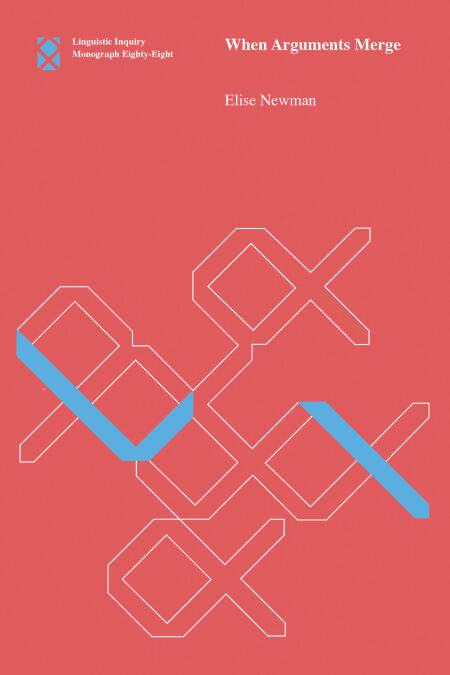
A novel theory of argument structure based on the order in which verbs and their arguments combine across a variety of languages and language families.
Merge is the structure-building operation in Chomsky’s Minimalist Program. In When Arguments Merge, Elise Newman develops a new Merge-based theory of the syntax of argument structure, taking inspiration from wh- questions. She uncovers new connections between disparate empirical phenomena and provides a unified analysis of patterns across many languages and language families, from Mayan to Bantu to Indo-European languages (among others). The result is a syntactic theory with a small inventory of features and categories that can combine in a limited number of ways, capturing the range of argument configurations that we find cross-linguistically in both declarative and interrogative contexts.
Newman’s novel approach to argument structure is based on the time at which different kinds of arguments merge and move in the verbal domain. Assuming that all kinds of Merge are driven by features, she proposes that subset relationships between elements bearing different sets of features can constrain the distribution of arguments in unexpected ways and that different feature bundles can predict unusual interactions between arguments in many contexts. The positions of arguments in different contexts have consequences for agreement alignment and case assignment, which are reflected in the Voice of the clause. Examining the order in which verbs and their arguments are combined, she explores the consequences of different orders of combination for the kinds of utterances observed across languages.
Merge is the structure-building operation in Chomsky’s Minimalist Program. In When Arguments Merge, Elise Newman develops a new Merge-based theory of the syntax of argument structure, taking inspiration from wh- questions. She uncovers new connections between disparate empirical phenomena and provides a unified analysis of patterns across many languages and language families, from Mayan to Bantu to Indo-European languages (among others). The result is a syntactic theory with a small inventory of features and categories that can combine in a limited number of ways, capturing the range of argument configurations that we find cross-linguistically in both declarative and interrogative contexts.
Newman’s novel approach to argument structure is based on the time at which different kinds of arguments merge and move in the verbal domain. Assuming that all kinds of Merge are driven by features, she proposes that subset relationships between elements bearing different sets of features can constrain the distribution of arguments in unexpected ways and that different feature bundles can predict unusual interactions between arguments in many contexts. The positions of arguments in different contexts have consequences for agreement alignment and case assignment, which are reflected in the Voice of the clause. Examining the order in which verbs and their arguments are combined, she explores the consequences of different orders of combination for the kinds of utterances observed across languages.
Specificaties
Betrokkenen
- Auteur(s):
- Uitgeverij:
Inhoud
- Aantal bladzijden:
- 230
- Taal:
- Engels
- Reeks:
Eigenschappen
- Productcode (EAN):
- 9780262379977
- Verschijningsdatum:
- 14/10/2024
- Uitvoering:
- E-book
- Beveiligd met:
- Adobe DRM
- Formaat:
- ePub


Alleen bij Standaard Boekhandel
+ 44 punten op je klantenkaart van Standaard Boekhandel
Cadeau

AANGERADEN


Beoordelingen
We publiceren alleen reviews die voldoen aan de voorwaarden voor reviews. Bekijk onze voorwaarden voor reviews.