Standaard Boekhandel gebruikt cookies en gelijkaardige technologieën om de website goed te laten werken en je een betere surfervaring te bezorgen.
Hieronder kan je kiezen welke cookies je wilt inschakelen:
Technische en functionele cookies
Deze cookies zijn essentieel om de website goed te laten functioneren, en laten je toe om bijvoorbeeld in te loggen. Je kan deze cookies niet uitschakelen.
Analytische cookies
Deze cookies verzamelen anonieme informatie over het gebruik van onze website. Op die manier kunnen we de website beter afstemmen op de behoeften van de gebruikers.
Marketingcookies
Deze cookies delen je gedrag op onze website met externe partijen, zodat je op externe platformen relevantere advertenties van Standaard Boekhandel te zien krijgt.
Bedankt voor het vertrouwen het afgelopen jaar! Om jou te bedanken bieden we GRATIS verzending (in België) aan op alles gedurende de hele maand januari.
Afhalen na 1 uur in een winkel met voorraad
In januari gratis thuislevering in België
Ruim aanbod met 7 miljoen producten
Bedankt voor het vertrouwen het afgelopen jaar! Om jou te bedanken bieden we GRATIS verzending (in België) aan op alles gedurende de hele maand januari.
Je kan maximaal 250 producten tegelijk aan je winkelmandje toevoegen. Verwijdere enkele producten uit je winkelmandje, of splits je bestelling op in meerdere bestellingen.
In januari gratis thuislevering in België (via bpost)
Gratis levering in je Standaard Boekhandel
Omschrijving
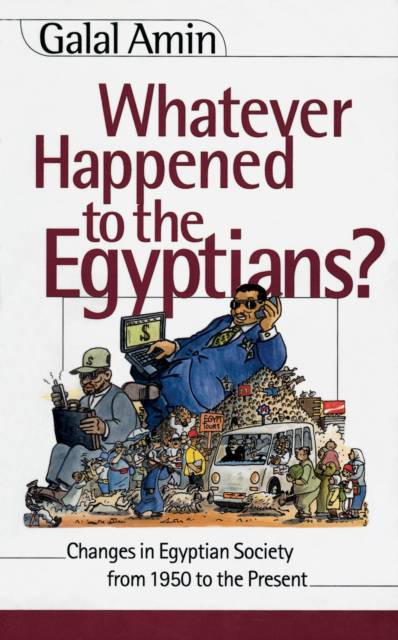
Based on both academic research and the author's own personal experiences and impressions, this delightful and informative book examines the underlying causes of some of the more disturbing social, political, economic, and cultural phenomena that characterize Egyptian society in modern times. Through a fascinating and often highly entertaining examination of issues ranging from the middle class, religious fanaticism, and attitudes to the West and Western culture, to the Egyptian institution of the summer holiday by the sea and the performing arts and entertainment, Amin posits that social mobility after the 1952 Revolution changed the customs and habits, moral and material values, and patterns of consumption and investment of the aspiring classes. This insightful book will prove a thought-provoking read for those concerned with emerging economies, international development, and privatization, and will intrigue anyone with an interest in the social history of Egypt.