


- Afhalen na 1 uur in een winkel met voorraad
- Gratis thuislevering in België vanaf € 30
- Ruim aanbod met 7 miljoen producten
- Afhalen na 1 uur in een winkel met voorraad
- Gratis thuislevering in België vanaf € 30
- Ruim aanbod met 7 miljoen producten





€ 138,95
+ 277 punten
Omschrijving
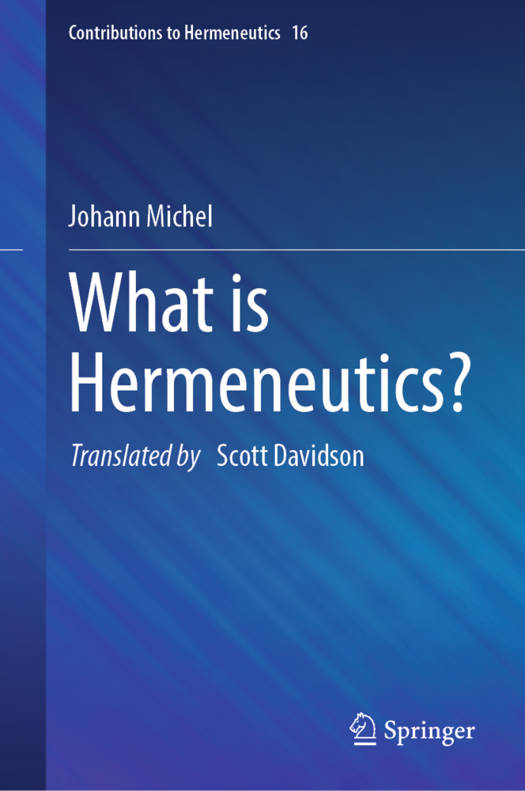
This book reveals how hermeneutics has experienced unprecedented attention under the leadership of Heidegger, Gadamer and Ricoeur, after long being confined to a restricted field of disciplines focused on understanding discourse. The author confronts the following questions: What is understanding? How to interpret a work of art? Can we decipher nature? How to orient yourself in space?
This monograph reveals how hermeneutics leaves the refuge of erudition to become a new field of philosophical exploration centered on the life of the spirit, on modes of existence and on traditions. It proposes an in-depth renewal of hermeneutics through a close dialogue with semiotics, pragmatism and the social sciences with the aid of three guiding ideas. The first, anthropological, makes interpretation a fundamental activity of humans in their ordinary activities, before making it a set of techniques in the service of scientific knowledge. The second, pragmatist, reserves interpretation for a reflective understanding confronted with problematic meanings. The third, epistemological, extends the field of investigation of hermeneutics beyond the text (nature, others, space, the work of art, the social world, etc.). Alongside researchers, this book serves as an advanced introduction to the field and appeals to upper undergraduates and graduate students.
Specificaties
Betrokkenen
- Auteur(s):
- Vertaler(s):
- Uitgeverij:
Inhoud
- Aantal bladzijden:
- 178
- Taal:
- Engels
- Reeks:
- Reeksnummer:
- nr. 16
Eigenschappen
- Productcode (EAN):
- 9783032161895
- Verschijningsdatum:
- 24/04/2026
- Uitvoering:
- Hardcover
- Afmetingen:
- 155 mm x 235 mm


Alleen bij Standaard Boekhandel
+ 277 punten op je klantenkaart van Standaard Boekhandel
Cadeau

AANGERADEN


Beoordelingen
We publiceren alleen reviews die voldoen aan de voorwaarden voor reviews. Bekijk onze voorwaarden voor reviews.