


- Afhalen na 1 uur in een winkel met voorraad
- Gratis thuislevering in België vanaf € 30
- Ruim aanbod met 7 miljoen producten
- Afhalen na 1 uur in een winkel met voorraad
- Gratis thuislevering in België vanaf € 30
- Ruim aanbod met 7 miljoen producten




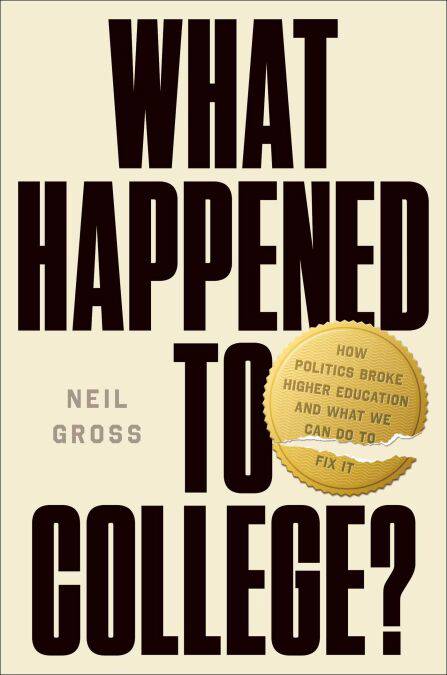
What Happened to College? E-BOOK
How Politics Broke Higher Education and What We Can Do to Fix It
Neil Gross
E-book | Engels
€ 16,76
+ 16 punten
Omschrijving
How did college become such a minefield? A sociologist who has been tracking the polarization of higher education reveals how things went off track, what students are saying, and where we can find hope.
Imagine arriving on campus, full of excitement and anticipation, only to find that every other conversation can devolve into an ideological litmus test. Over the last ten years, politics has seeped into every corner of college life. From the moment students set foot in their dorms, they’re navigating a morass of self-censorship and social exclusion. How can anyone hope to learn when the cost of speaking freely is so high?
A sociologist known for his groundbreaking work on campus politics, Neil Gross spoke to hundreds of students and faculty at America’s top colleges and universities and polled thousands more to make sense of how epic polarization, cancel culture, battles over race and gender, administrative overreach, anxieties about the future of work, and intrusive political assumptions baked into the curriculum have remade the college experience. What he found was startling: To a degree unimaginable a generation ago, undergraduates are choosing their schools, friends, partners, activities, majors, and classes based on their political beliefs, with the goal of interacting as little as possible with anyone whose views don’t line up with their own. Popular campus dating apps invite you to swipe left if you don’t like someone’s political profile—a metaphor for today’s college experience writ large. Instead of resisting this development, faculty and administrators added fuel to the fire.
A must-read for anyone who cares about our kids, their education, and the future of our democracy, What Happened to College? paints a stark picture of an educational system in crisis––and under assault. But it’s not all doom and gloom. While some are questioning the value of an over-priced degree, there are places where open debate and friendship across political lines still thrive. What’s their secret? And will our universities, once the envy of the world, have the courage and creativity to get back on track?
Imagine arriving on campus, full of excitement and anticipation, only to find that every other conversation can devolve into an ideological litmus test. Over the last ten years, politics has seeped into every corner of college life. From the moment students set foot in their dorms, they’re navigating a morass of self-censorship and social exclusion. How can anyone hope to learn when the cost of speaking freely is so high?
A sociologist known for his groundbreaking work on campus politics, Neil Gross spoke to hundreds of students and faculty at America’s top colleges and universities and polled thousands more to make sense of how epic polarization, cancel culture, battles over race and gender, administrative overreach, anxieties about the future of work, and intrusive political assumptions baked into the curriculum have remade the college experience. What he found was startling: To a degree unimaginable a generation ago, undergraduates are choosing their schools, friends, partners, activities, majors, and classes based on their political beliefs, with the goal of interacting as little as possible with anyone whose views don’t line up with their own. Popular campus dating apps invite you to swipe left if you don’t like someone’s political profile—a metaphor for today’s college experience writ large. Instead of resisting this development, faculty and administrators added fuel to the fire.
A must-read for anyone who cares about our kids, their education, and the future of our democracy, What Happened to College? paints a stark picture of an educational system in crisis––and under assault. But it’s not all doom and gloom. While some are questioning the value of an over-priced degree, there are places where open debate and friendship across political lines still thrive. What’s their secret? And will our universities, once the envy of the world, have the courage and creativity to get back on track?
Specificaties
Betrokkenen
- Auteur(s):
- Uitgeverij:
Inhoud
- Aantal bladzijden:
- 272
- Taal:
- Engels
Eigenschappen
- Productcode (EAN):
- 9781668200469
- Verschijningsdatum:
- 24/08/2026
- Uitvoering:
- E-book
- Beveiligd met:
- Adobe DRM
- Formaat:
- ePub


Alleen bij Standaard Boekhandel
+ 16 punten op je klantenkaart van Standaard Boekhandel
AANGERADEN


Beoordelingen
We publiceren alleen reviews die voldoen aan de voorwaarden voor reviews. Bekijk onze voorwaarden voor reviews.