


- Afhalen na 1 uur in een winkel met voorraad
- Gratis thuislevering in België vanaf € 30
- Ruim aanbod met 7 miljoen producten
- Afhalen na 1 uur in een winkel met voorraad
- Gratis thuislevering in België vanaf € 30
- Ruim aanbod met 7 miljoen producten





€ 81,45
+ 162 punten
Omschrijving
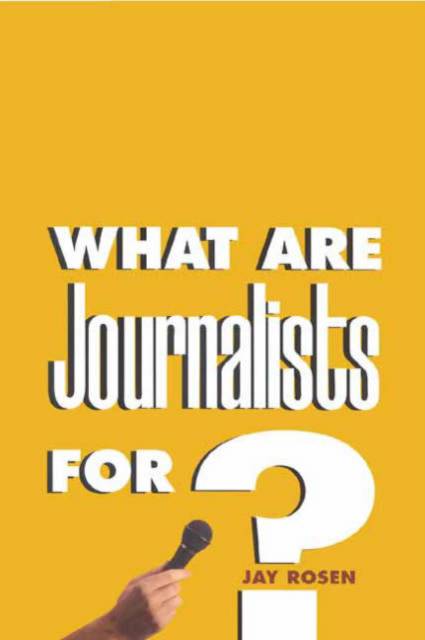
American journalists in the 1990s confronted disturbing trends-an erosion of trust in the news media, weakening demand for serious news, flagging interest in politics and civic affairs, and a discouraging public climate that seemed to be getting worse. In response, some news professionals sought to breach the growing gap between press and public with an experimental approach-public journalism. This book is an account of the movement for public journalism, or civic journalism, told by Jay Rosen, one of its leading developers and defenders. Rosen recalls the events that led to the movement's founding and gives a range of examples of how public journalism is practiced in American newsrooms. He traces the intellectual roots of the movement and shows how journalism can be made vital again by rethinking exactly what journalists are for. Those who have supported the cause of public journalism have focused on first principles: democracy as something we do, citizens as the ones who do it, politics as public problem-solving, and deliberation as a means to that end. Rosen tells what happened as the movement gained momentum in newsrooms around the country and in the professional culture of the press. He reviews the flood of criticism and commentary aimed at public journalism and responds to those who express alarm at the experiment. Examining the mark that the movement has made on the field, Rosen upholds public journalism not only as a way for journalists to find a renewed sense of civic purpose for their craft, but also as a way to improve civic life and strengthen democracy.
Specificaties
Betrokkenen
- Auteur(s):
- Uitgeverij:
Inhoud
- Aantal bladzijden:
- 384
- Taal:
- Engels
Eigenschappen
- Productcode (EAN):
- 9780300089073
- Verschijningsdatum:
- 1/02/2001
- Uitvoering:
- Paperback
- Formaat:
- Trade paperback (VS)
- Afmetingen:
- 155 mm x 234 mm
- Gewicht:
- 462 g



Alleen bij Standaard Boekhandel
+ 162 punten op je klantenkaart van Standaard Boekhandel
Cadeau

AANGERADEN


Beoordelingen
We publiceren alleen reviews die voldoen aan de voorwaarden voor reviews. Bekijk onze voorwaarden voor reviews.