



Bedankt voor het vertrouwen het afgelopen jaar! Om jou te bedanken bieden we GRATIS verzending (in België) aan op alles gedurende de hele maand januari.
- Afhalen na 1 uur in een winkel met voorraad
- In januari gratis thuislevering in België
- Ruim aanbod met 7 miljoen producten
Bedankt voor het vertrouwen het afgelopen jaar! Om jou te bedanken bieden we GRATIS verzending (in België) aan op alles gedurende de hele maand januari.
- Afhalen na 1 uur in een winkel met voorraad
- In januari gratis thuislevering in België
- Ruim aanbod met 7 miljoen producten





Omschrijving
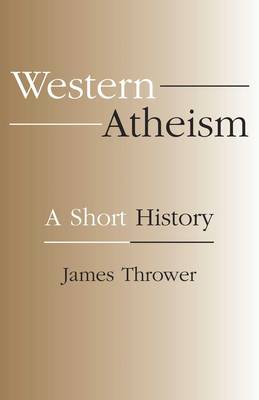
Much has been written on religions of all types, the history of religious belief, and on the supernatural interpretation of the world, but where can we turn for an account of unbelief-the naturalistic alternative?James Thrower's concise and direct approach examines the thinkers and schools which defined atheism, beginning with Greece, Rome, and Israel. He notes that the intellectual status of unbelief rose significantly in Western Europe as a result of the clash in the Middle Ages between the powerful force of faith and the emerging but still limited influence of reason. Physical science was developing and the world of the intellect would expand during the Renaissance that followed.This delightfully pertinent short history illustrates the leading issues separating the theist from the atheist and agnostic, and sheds light on world events and the inconsistencies inherent in supernaturalism and theistic theories. Thrower discusses atheism both as a reaction to belief and as a separate and consistent form of belief in a world stripped of the divine, where reason, science, and humankind's endless search for knowledge flourish.
Specificaties
Betrokkenen
- Auteur(s):
- Uitgeverij:
Inhoud
- Aantal bladzijden:
- 178
- Taal:
- Engels
Eigenschappen
- Productcode (EAN):
- 9781573927567
- Verschijningsdatum:
- 1/12/1999
- Uitvoering:
- Paperback
- Formaat:
- Trade paperback (VS)
- Afmetingen:
- 154 mm x 230 mm
- Gewicht:
- 226 g


Alleen bij Standaard Boekhandel
+ 64 punten op je klantenkaart van Standaard Boekhandel
CADEAU


Beoordelingen
We publiceren alleen reviews die voldoen aan de voorwaarden voor reviews. Bekijk onze voorwaarden voor reviews.