


- Afhalen na 1 uur in een winkel met voorraad
- Gratis thuislevering in België vanaf € 30
- Ruim aanbod met 7 miljoen producten
- Afhalen na 1 uur in een winkel met voorraad
- Gratis thuislevering in België vanaf € 30
- Ruim aanbod met 7 miljoen producten





€ 18,45
+ 36 punten
Omschrijving
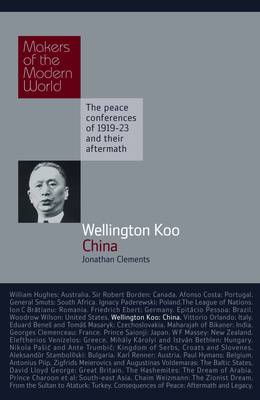
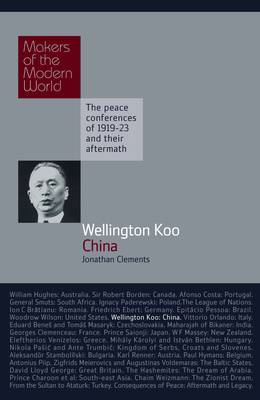
Gu Weijun, a.k.a. Wellington Koo (1887-1985). Born in Shanghai and raised in the city's International Settlement, Koo became fluent in English during his postgraduate studies abroad - he got a PhD in Law from Columbia in 1912. He was recalled soon afterwards to become the English Secretary to the newly formed Republic of China, and became ambassador to the United States in 1915. He achieved notoriety at the Paris Peace Conference where he sternly resisted Japanese attempts to hold onto seized German colonial territory in mainland China. In protest at their treatment, the Chinese were the only delegates not to sign the subsequent Treaty of Versailles. Koo was China's first representative to the League of Nations, and ended up as acting president of Republican China during the unrest of the period 1926-7. He subsequently served briefly as a Foreign Minister during the peak of the Warlord Era, before returning to Europe, first as a delegate at the League of Nations, and then as China's ambassador to France. With the Nazi occupation, Koo fled to Britain, where he became the Chinese ambassador to the UK until 1946. A founder member of the United Nations, Koo was instrumental in maintaining the position of Republican China on the Security Council -by this time, 'Republican China' was limited solely to the island of Taiwan, while the Communists proclaimed themselves to be the new rulers of China itself. Retiring from the diplomatic service in 1956, the venerable Koo went on to become a judge at the International Court of Justice at the Hague, rising to vice-president before his retirement, aged 80, in 1967. He settled in New York, where his final years were tormented by 'Republican' China's loss of its seat on the United Nations Security Council to the Communists, following Nixon's famous visit to China.
Specificaties
Betrokkenen
- Auteur(s):
- Uitgeverij:
Inhoud
- Aantal bladzijden:
- 220
- Taal:
- Engels
- Reeks:
Eigenschappen
- Productcode (EAN):
- 9781905791699
- Verschijningsdatum:
- 1/12/2008
- Uitvoering:
- Hardcover
- Formaat:
- Genaaid
- Afmetingen:
- 137 mm x 201 mm
- Gewicht:
- 408 g


Alleen bij Standaard Boekhandel
+ 36 punten op je klantenkaart van Standaard Boekhandel
Cadeau

AANGERADEN


Beoordelingen
We publiceren alleen reviews die voldoen aan de voorwaarden voor reviews. Bekijk onze voorwaarden voor reviews.