


- Afhalen na 1 uur in een winkel met voorraad
- Gratis thuislevering in België vanaf € 30
- Ruim aanbod met 7 miljoen producten
- Afhalen na 1 uur in een winkel met voorraad
- Gratis thuislevering in België vanaf € 30
- Ruim aanbod met 7 miljoen producten





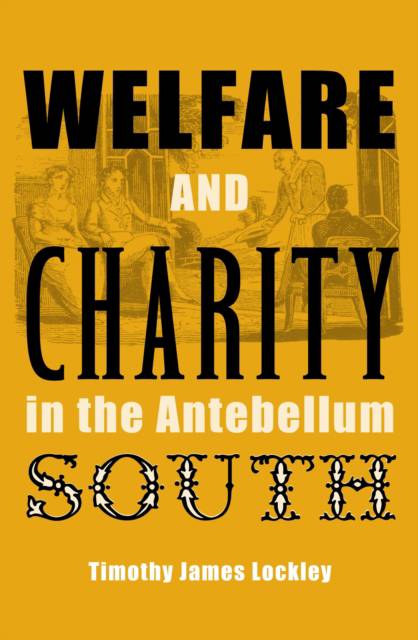
Welfare and Charity in the Antebellum South
Timothy James Lockley
€ 45,95
+ 91 punten
Omschrijving
Public welfare in the United States has existed in one form or another since the colonial period. Most historical investigations into the practice tend to focus on urban settings, mostly in the North. Welfare and Charity in the Antebellum South offers a much-needed counterpoint, revealing both the breadth of how southerner elites helped their poor, even in rural areas, and the racial impetus behind their actions. In the nineteenth century, private benevolence was almost exclusively for whites. Public welfare in the South was disproportionately targeted at poor whites, and included the founding of state-supported schools, orphan and health care, and efforts to ameliorate starvation. As a result, poor whites' resentment of the rich was diminished, and they were, as a group, more willing to cast their lot with slaveholders as the Civil War loomed large. This work ranges over the entire South and makes important comparisons between the upper and lower South, between urban and rural areas, and between welfare efforts in the South and in the North, where charity typically--and incorrectly--has been seen as more widespread.
Specificaties
Betrokkenen
- Auteur(s):
- Uitgeverij:
Inhoud
- Aantal bladzijden:
- 304
- Taal:
- Engels
- Reeks:
Eigenschappen
- Productcode (EAN):
- 9780813034461
- Verschijningsdatum:
- 30/09/2009
- Uitvoering:
- Paperback
- Formaat:
- Trade paperback (VS)
- Afmetingen:
- 152 mm x 229 mm
- Gewicht:
- 435 g


Alleen bij Standaard Boekhandel
+ 91 punten op je klantenkaart van Standaard Boekhandel
Cadeau

AANGERADEN


Beoordelingen
We publiceren alleen reviews die voldoen aan de voorwaarden voor reviews. Bekijk onze voorwaarden voor reviews.