


- Afhalen na 1 uur in een winkel met voorraad
- Gratis thuislevering in België vanaf € 30
- Ruim aanbod met 7 miljoen producten
- Afhalen na 1 uur in een winkel met voorraad
- Gratis thuislevering in België vanaf € 30
- Ruim aanbod met 7 miljoen producten





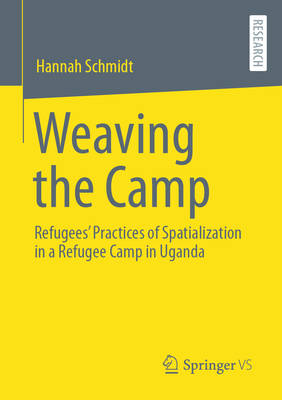
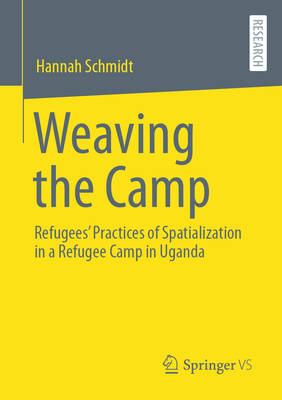
Weaving the Camp
Refugees' Practices of Spatialization in a Refugee Camp in Uganda
Hannah Schmidt
Paperback | Engels
€ 97,45
+ 194 punten
Omschrijving
This book offers a socio-spatial analysis of a refugee camp in southwestern Uganda. Based on qualitative research with a multi-method approach the author shows how refugees are central actors in the operation and becoming of a camp. Not only do they crucially contribute to its social, micro-economic, and material realization but they also incrementally rearrange the camp space by acts of constant adaptation in order to make it work for its inhabitants. By means of social interaction, infrastructuring, translation, movement and material improvisation they navigate daily life in the semi-constricted and highly precarious space of the refugee protection regime and carve out its social and material landscape. Thus, this study challenges static understandings of camps and restricted conditions and puts forward theoretical implications for the rethinking and reassessment of agency in such contexts by calling for closer attention to ordinary practices.
Specificaties
Betrokkenen
- Auteur(s):
- Uitgeverij:
Inhoud
- Aantal bladzijden:
- 278
- Taal:
- Engels
Eigenschappen
- Productcode (EAN):
- 9783658416492
- Verschijningsdatum:
- 14/07/2023
- Uitvoering:
- Paperback
- Formaat:
- Trade paperback (VS)
- Afmetingen:
- 148 mm x 210 mm
- Gewicht:
- 394 g


Alleen bij Standaard Boekhandel
+ 194 punten op je klantenkaart van Standaard Boekhandel
Cadeau

AANGERADEN


Beoordelingen
We publiceren alleen reviews die voldoen aan de voorwaarden voor reviews. Bekijk onze voorwaarden voor reviews.