


- Afhalen na 1 uur in een winkel met voorraad
- Gratis thuislevering in België vanaf € 30
- Ruim aanbod met 7 miljoen producten
- Afhalen na 1 uur in een winkel met voorraad
- Gratis thuislevering in België vanaf € 30
- Ruim aanbod met 7 miljoen producten





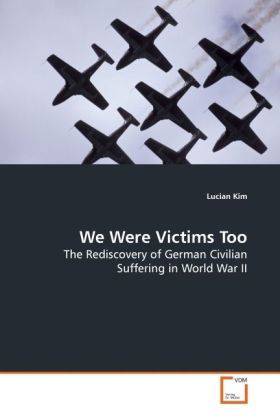
We Were Victims Too
The Rediscovery of German Civilian Suffering in World War II
Lucian Kim
Paperback | Engels
€ 48,45
+ 96 punten
Omschrijving
Since the end of World War II, the memory of Hitler's
crimes has followed Germans at every step. At the
time of German unification in 1990, the Third Reich
could be reduced to the most basic formula: Germans =
perpetrators, Jews = victims. Only with the
publication in 2002 of Günter Grass's novel
"Crabwalk" was public attention focused on the fate
of millions of Germans expelled from eastern Europe
at the end of World War II. Within months, the
appearance of another book, "The Fire: The Bombing of
Germany," by Jörg Friedrich, questioned the morality
and strategic sense of Allied bombing raids that
killed more than half a million civilians and razed
dozens of cities. This book traces the origins of the
recent recognition of German civilian suffering
during World War II and examines the debates that
accompanied it. What had changed in Germany to make
this discussion even possible? Will Germans now line
up to take their place in the universal cult of
victimhood?
crimes has followed Germans at every step. At the
time of German unification in 1990, the Third Reich
could be reduced to the most basic formula: Germans =
perpetrators, Jews = victims. Only with the
publication in 2002 of Günter Grass's novel
"Crabwalk" was public attention focused on the fate
of millions of Germans expelled from eastern Europe
at the end of World War II. Within months, the
appearance of another book, "The Fire: The Bombing of
Germany," by Jörg Friedrich, questioned the morality
and strategic sense of Allied bombing raids that
killed more than half a million civilians and razed
dozens of cities. This book traces the origins of the
recent recognition of German civilian suffering
during World War II and examines the debates that
accompanied it. What had changed in Germany to make
this discussion even possible? Will Germans now line
up to take their place in the universal cult of
victimhood?
Specificaties
Betrokkenen
- Auteur(s):
- Uitgeverij:
Inhoud
- Aantal bladzijden:
- 68
- Taal:
- Engels
Eigenschappen
- Productcode (EAN):
- 9783639106671
- Uitvoering:
- Paperback


Alleen bij Standaard Boekhandel
+ 96 punten op je klantenkaart van Standaard Boekhandel
Cadeau

AANGERADEN


Beoordelingen
We publiceren alleen reviews die voldoen aan de voorwaarden voor reviews. Bekijk onze voorwaarden voor reviews.