


- Afhalen na 1 uur in een winkel met voorraad
- Gratis thuislevering in België vanaf € 30
- Ruim aanbod met 7 miljoen producten
- Afhalen na 1 uur in een winkel met voorraad
- Gratis thuislevering in België vanaf € 30
- Ruim aanbod met 7 miljoen producten





€ 34,95
+ 69 punten
Omschrijving
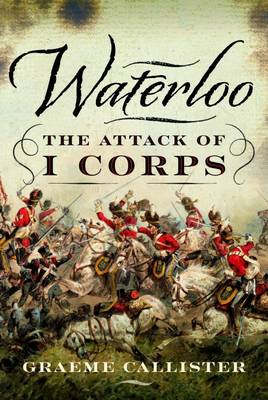
The I Corps offensive at Waterloo foregrounds a pivotal, near-miss engagement that reshaped the battle's outcome and tested soldier morale, leadership, and cohesion under intense fire.
This book provides a detailed analysis of the attack of the Comte d'Erlon's French I Corps, and the subsequent allied counterattack, at the Battle of Waterloo. This assault by 20,000 men and eighty guns in the early afternoon of 18 June 1815 came as close as any to winning the battle for Napoleon. It was eventually repulsed - just - by two stretched Allied infantry divisions and two brigades of cavalry and was, in the words of the Duke of Wellington himself, "one of the most serious attacks made by the enemy." Until now, there has been surprisingly little in-depth analysis of this crucial moment in the battle - something that this book seeks to remedy.
Graeme Callister combines a detailed narrative with a thorough analysis of how the event unfolded. All aspects of the attack are covered; from the grand tactics to the human experience of being in the firing lines, considering the soldiers' experience, morale, leadership, condition and cohesion. Using rarely before analysed material from the French regimental registers, it examines the service records of individuals involved in the action, alongside the first-hand accounts and reminiscences of those who left them.
The book begins with an assessment of the background of each of the forces: their composition, command structures, and the condition of their men. It then discusses how they found themselves to be in their positions on the battlefield, exploring the grand tactics, terrain, and wider strategic situation. The main part of the analysis focuses on the attack itself, looking at the formations and direction of the attacking forces (the four divisions of Quiot, Donzelot, Marcognet, and Durutte, plus the grand battery and supporting cuirassier brigade) and the tactical approach of the men set to meet them.
Based on a wide range of primary sources, including those in French, English, Dutch and German, this book offers fresh perspectives on a crucial part of the Waterloo story, and helps us to understand why men advanced or stood, fought or ran, and lived or died amidst the maelstrom of battle.
This book provides a detailed analysis of the attack of the Comte d'Erlon's French I Corps, and the subsequent allied counterattack, at the Battle of Waterloo. This assault by 20,000 men and eighty guns in the early afternoon of 18 June 1815 came as close as any to winning the battle for Napoleon. It was eventually repulsed - just - by two stretched Allied infantry divisions and two brigades of cavalry and was, in the words of the Duke of Wellington himself, "one of the most serious attacks made by the enemy." Until now, there has been surprisingly little in-depth analysis of this crucial moment in the battle - something that this book seeks to remedy.
Graeme Callister combines a detailed narrative with a thorough analysis of how the event unfolded. All aspects of the attack are covered; from the grand tactics to the human experience of being in the firing lines, considering the soldiers' experience, morale, leadership, condition and cohesion. Using rarely before analysed material from the French regimental registers, it examines the service records of individuals involved in the action, alongside the first-hand accounts and reminiscences of those who left them.
The book begins with an assessment of the background of each of the forces: their composition, command structures, and the condition of their men. It then discusses how they found themselves to be in their positions on the battlefield, exploring the grand tactics, terrain, and wider strategic situation. The main part of the analysis focuses on the attack itself, looking at the formations and direction of the attacking forces (the four divisions of Quiot, Donzelot, Marcognet, and Durutte, plus the grand battery and supporting cuirassier brigade) and the tactical approach of the men set to meet them.
Based on a wide range of primary sources, including those in French, English, Dutch and German, this book offers fresh perspectives on a crucial part of the Waterloo story, and helps us to understand why men advanced or stood, fought or ran, and lived or died amidst the maelstrom of battle.
Specificaties
Betrokkenen
- Auteur(s):
- Uitgeverij:
Inhoud
- Aantal bladzijden:
- 256
- Taal:
- Engels
Eigenschappen
- Productcode (EAN):
- 9781399045438
- Verschijningsdatum:
- 30/05/2026
- Uitvoering:
- Paperback
- Formaat:
- Trade paperback (VS)
- Afmetingen:
- 159 mm x 235 mm


Alleen bij Standaard Boekhandel
+ 69 punten op je klantenkaart van Standaard Boekhandel
Cadeau

AANGERADEN


Beoordelingen
We publiceren alleen reviews die voldoen aan de voorwaarden voor reviews. Bekijk onze voorwaarden voor reviews.