



Je cadeautjes zeker op tijd in huis hebben voor de feestdagen? Kom langs in onze winkels en vind het perfecte geschenk!
- Afhalen na 1 uur in een winkel met voorraad
- Gratis thuislevering in België vanaf € 30
- Ruim aanbod met 7 miljoen producten
Je cadeautjes zeker op tijd in huis hebben voor de feestdagen? Kom langs in onze winkels en vind het perfecte geschenk!
- Afhalen na 1 uur in een winkel met voorraad
- Gratis thuislevering in België vanaf € 30
- Ruim aanbod met 7 miljoen producten





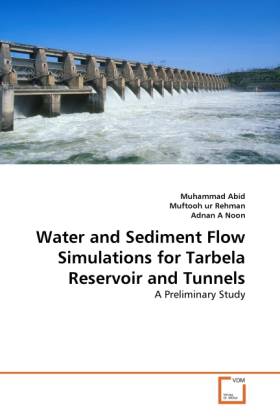
Water and Sediment Flow Simulations for Tarbela Reservoir and Tunnels
A Preliminary Study
Muhammad Abid, Muftooh Ur Rehman, Adnan A. Noon
Paperback | Engels
€ 74,45
+ 148 punten
Omschrijving
Tarbela dam is one of the largest earth filled dam in the world used for power generation and irrigation purposes. Like all reservoirs the sediments inflow in the Tarbela reservoir has also resulted in reduction in water storage capacity and is also causing damage to the tunnels, the power generating units and ultimately to the plant equipment. This book is a starting effort in the modeling, simulation and analysis of Tarbela Dam infrastructure. Detailed simulation results highlight the critical areas for damage and ultimately the life prediction of the reservoir in terms of its storage capacity, erosion rate and strength of the tunnels. In first part of this book, results of numerical studies regarding water and sediment flow through Tarbela reservoir are discussed. In second part, results of numerical studies regarding turbulent flows through the tunnels with and without considering the effect of sediments, for different water heads, for one way and two way couplings, different injection techniques, different turbulence models are discussed. Numerical models developed will be helpful in the study of existing dams and the design of future projects.
Specificaties
Betrokkenen
- Auteur(s):
- Uitgeverij:
Inhoud
- Aantal bladzijden:
- 132
- Taal:
- Engels
Eigenschappen
- Productcode (EAN):
- 9783639341836
- Verschijningsdatum:
- 15/04/2011
- Uitvoering:
- Paperback
- Afmetingen:
- 152 mm x 220 mm
- Gewicht:
- 204 g


Alleen bij Standaard Boekhandel
+ 148 punten op je klantenkaart van Standaard Boekhandel
CADEAU


Beoordelingen
We publiceren alleen reviews die voldoen aan de voorwaarden voor reviews. Bekijk onze voorwaarden voor reviews.