


- Afhalen na 1 uur in een winkel met voorraad
- Gratis thuislevering in België vanaf € 30
- Ruim aanbod met 7 miljoen producten
- Afhalen na 1 uur in een winkel met voorraad
- Gratis thuislevering in België vanaf € 30
- Ruim aanbod met 7 miljoen producten





€ 59,95
+ 119 punten
Omschrijving
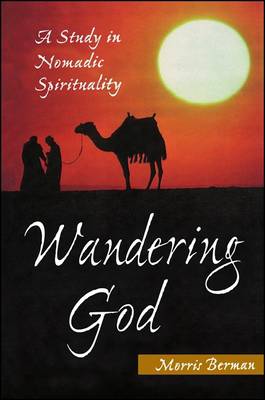
The third book in Morris Berman's much acclaimed trilogy on the evolution of human consciousness, Wandering God continues his earlier work which garnered such praise as "solid lessons in the history of ideas" (KIRKUS Reviews), "filled with piquant details" (Common Boundary), and "an informative synthesis and a remarkably friendly, good-natured jeremiad" (The Village Voice). Here, in a remarkable discussion of our hunter-gatherer ancestry and the "paradoxical" mode of perception that it involved, Berman shows how a sense of alertness, or secular/sacred immediacy, subsequently got buried by the rise of sedentary civilization, religion, and vertical power relationships.
In an integrated tour de force, Wandering God explores the meaning of Paleolithic art, the origins of social inequality, the nature of cross-cultural child rearing, the relationship between women and agriculture, and the world view of present-day nomadic peoples, as well as the emergence of "paradoxical" consciousness in the philosophical writings of the twentieth century.
In an integrated tour de force, Wandering God explores the meaning of Paleolithic art, the origins of social inequality, the nature of cross-cultural child rearing, the relationship between women and agriculture, and the world view of present-day nomadic peoples, as well as the emergence of "paradoxical" consciousness in the philosophical writings of the twentieth century.
Specificaties
Betrokkenen
- Auteur(s):
- Uitgeverij:
Inhoud
- Aantal bladzijden:
- 364
- Taal:
- Engels
Eigenschappen
- Productcode (EAN):
- 9780791444429
- Verschijningsdatum:
- 17/02/2000
- Uitvoering:
- Paperback
- Formaat:
- Trade paperback (VS)
- Afmetingen:
- 152 mm x 229 mm
- Gewicht:
- 544 g


Alleen bij Standaard Boekhandel
+ 119 punten op je klantenkaart van Standaard Boekhandel
Cadeau

AANGERADEN


Beoordelingen
We publiceren alleen reviews die voldoen aan de voorwaarden voor reviews. Bekijk onze voorwaarden voor reviews.