



Bedankt voor het vertrouwen het afgelopen jaar! Om jou te bedanken bieden we GRATIS verzending (in België) aan op alles gedurende de hele maand januari.
- Afhalen na 1 uur in een winkel met voorraad
- In januari gratis thuislevering in België
- Ruim aanbod met 7 miljoen producten
Bedankt voor het vertrouwen het afgelopen jaar! Om jou te bedanken bieden we GRATIS verzending (in België) aan op alles gedurende de hele maand januari.
- Afhalen na 1 uur in een winkel met voorraad
- In januari gratis thuislevering in België
- Ruim aanbod met 7 miljoen producten





€ 258,45
+ 516 punten
Omschrijving
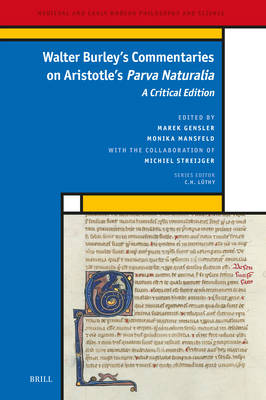
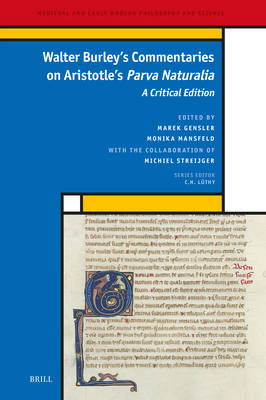
If you are interested in the science behind casting spells, why too much and too little sex is not good for your life, and whether it is possible to predict future from dreams or speculate while asleep, this book is for you. We present the first complete critical edition of the set of commentaries on Aristotle's short psychological and physiological treatises, the so-called Parva Naturalia, penned by Walter Burley, an early fourteenth century Oxford philosopher, later William of Ockham's most formidable opponent. It is a true compendium of medieval natural philosophy, putting together information taken from Aristotle, Avicenna, Averroes, Albert the Great, Thomas Aquinas, Peter of Auvergne, Simon of Faversham, and many more.
Specificaties
Betrokkenen
- Auteur(s):
- Uitgeverij:
Inhoud
- Aantal bladzijden:
- 404
- Taal:
- Engels
- Reeks:
- Reeksnummer:
- nr. 42
Eigenschappen
- Productcode (EAN):
- 9789004449008
- Verschijningsdatum:
- 17/04/2025
- Uitvoering:
- Hardcover
- Formaat:
- Genaaid
- Afmetingen:
- 162 mm x 240 mm
- Gewicht:
- 693 g


Alleen bij Standaard Boekhandel
+ 516 punten op je klantenkaart van Standaard Boekhandel
SOLDEN


Beoordelingen
We publiceren alleen reviews die voldoen aan de voorwaarden voor reviews. Bekijk onze voorwaarden voor reviews.