


- Afhalen na 1 uur in een winkel met voorraad
- Gratis thuislevering in België vanaf € 30
- Ruim aanbod met 7 miljoen producten
- Afhalen na 1 uur in een winkel met voorraad
- Gratis thuislevering in België vanaf € 30
- Ruim aanbod met 7 miljoen producten





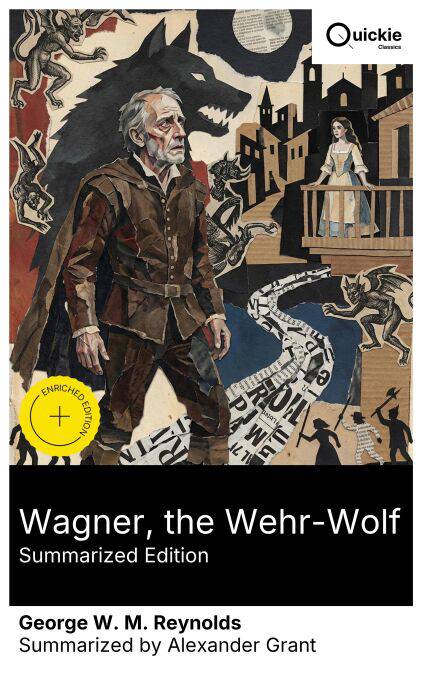
Wagner, the Wehr-Wolf (Summarized Edition) E-BOOK
Enriched edition. Gothic horror in 16th‑century Spain: a werewolf's transformation, forbidden romance, and a tragic hero's struggle between good and evil
George W. M. Reynolds
E-book | Engels
€ 1,99
+ 1 punten
Omschrijving
Wagner, the Wehr-Wolf is penny dreadful Gothic at full throttle: a Faustian tale of lycanthropy sweeping through early modern Europe. First serialized in the mid-1840s in Reynolds's Miscellany, it tracks Wagner's bargain—borrowed youth repaid in monstrous transformations—through pursuits, disguises, and remorse. Reynolds blends nocturnal atmospheres and diabolical tempters with cliffhangers and rapid scene-changes, making monstrosity a moral emblem and a critique of worldly ambition. George W. M. Reynolds—prolific radical, feuilleton-trained stylist, and editor of Reynolds's Newspaper—perfected an accessible, rapid idiom under the sway of Eugène Sue. His mastery of sprawling serials (not least The Mysteries of London) and Chartist sympathies inform Wagner, where Germanic folklore and the Faust legend become vehicles for probing desire, social mobility, and the price of power. Recommended for readers of Gothic and Victorian popular culture, this novel offers both lurid thrills and a lucid index to nineteenth-century anxieties about temptation, identity, and authority. Read it for its breakneck serial energy and for the surprising moral intelligence that steadies the spectacle of fur, fang, and unquiet conscience.
Quickie Classics summarizes timeless works with precision, preserving the author's voice and keeping the prose clear, fast, and readable—distilled, never diluted. Enriched Edition extras: Introduction · Synopsis · Historical Context · Brief Analysis · 4 Reflection Q&As · Editorial Footnotes.
Quickie Classics summarizes timeless works with precision, preserving the author's voice and keeping the prose clear, fast, and readable—distilled, never diluted. Enriched Edition extras: Introduction · Synopsis · Historical Context · Brief Analysis · 4 Reflection Q&As · Editorial Footnotes.
Specificaties
Betrokkenen
- Auteur(s):
- Uitgeverij:
Inhoud
- Aantal bladzijden:
- 200
- Taal:
- Engels
Eigenschappen
- Productcode (EAN):
- 8596547884187
- Verschijningsdatum:
- 9/01/2026
- Uitvoering:
- E-book
- Beveiligd met:
- Digital watermarking
- Formaat:
- ePub


Alleen bij Standaard Boekhandel
+ 1 punten op je klantenkaart van Standaard Boekhandel
Cadeau

AANGERADEN


Beoordelingen
We publiceren alleen reviews die voldoen aan de voorwaarden voor reviews. Bekijk onze voorwaarden voor reviews.