


- Afhalen na 1 uur in een winkel met voorraad
- Gratis thuislevering in België vanaf € 30
- Ruim aanbod met 7 miljoen producten
- Afhalen na 1 uur in een winkel met voorraad
- Gratis thuislevering in België vanaf € 30
- Ruim aanbod met 7 miljoen producten





Omschrijving
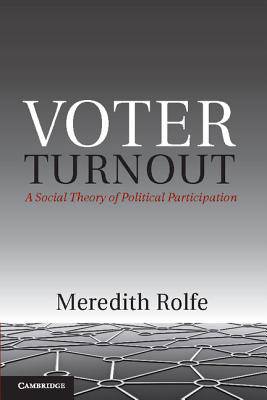
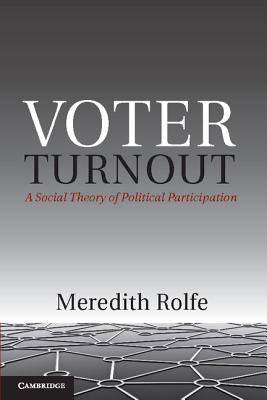
This book develops and empirically tests a social theory of political participation. It overturns prior understandings of why some people (such as college-degree holders, churchgoers, and citizens in national rather than local elections) vote more often than others. The book shows that the standard demographic variables are not proxies for variation in the individual costs and benefits of participation, but for systematic variation in the patterns of social ties between potential voters. Potential voters who move in larger social circles, particularly those including politicians and other mobilizing actors, have more access to the flurry of electoral activity prodding citizens to vote and increasing political discussion. Treating voting as a socially-defined practice instead of as an individual choice over personal payoffs, a social theory of participation is derived from a mathematical model with behavioral foundations that is empirically calibrated and tested using multiple methods and data sources.
Specificaties
Betrokkenen
- Auteur(s):
- Uitgeverij:
Inhoud
- Aantal bladzijden:
- 248
- Taal:
- Engels
- Reeks:
Eigenschappen
- Productcode (EAN):
- 9781107015418
- Verschijningsdatum:
- 13/02/2012
- Uitvoering:
- Hardcover
- Formaat:
- Genaaid
- Afmetingen:
- 155 mm x 231 mm
- Gewicht:
- 544 g


Alleen bij Standaard Boekhandel
+ 389 punten op je klantenkaart van Standaard Boekhandel
Cadeau

AANGERADEN


Beoordelingen
We publiceren alleen reviews die voldoen aan de voorwaarden voor reviews. Bekijk onze voorwaarden voor reviews.