



Je cadeautjes zeker op tijd in huis hebben voor de feestdagen? Kom langs in onze winkels en vind het perfecte geschenk!
- Afhalen na 1 uur in een winkel met voorraad
- Gratis thuislevering in België vanaf € 30
- Ruim aanbod met 7 miljoen producten
Je cadeautjes zeker op tijd in huis hebben voor de feestdagen? Kom langs in onze winkels en vind het perfecte geschenk!
- Afhalen na 1 uur in een winkel met voorraad
- Gratis thuislevering in België vanaf € 30
- Ruim aanbod met 7 miljoen producten





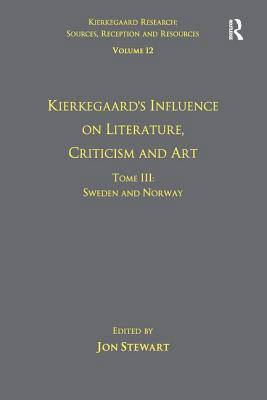
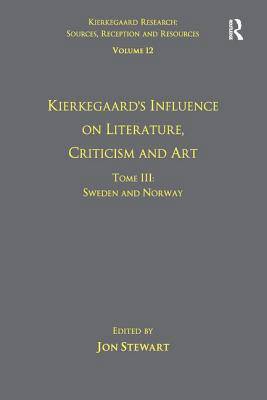
Volume 12, Tome III: Kierkegaard's Influence on Literature, Criticism and Art
Sweden and Norway
Jon Stewart
€ 106,95
+ 213 punten
Uitvoering
Omschrijving
While Kierkegaard is primarily known as a philosopher or religious thinker, his writings have also been used extensively by literary writers, critics and artists. This use can be traced in the work of major cultural figures not just in Denmark and Scandinavia but also in the wider world. They have been attracted to his creative mixing of genres, his complex use of pseudonyms, his rhetoric and literary style, and his rich images, parables and allegories. The present volume documents this influence in the different language groups and traditions. Tome III investigates the works of Swedish and Norwegian writers and artists inspired by Kierkegaard. In Sweden the novelist Victoria Benedictsson made use of Kierkegaard during the period of the so-called Modern Breakthrough, as did the playwright August Strindberg. Later Swedish writers have continued to draw on his thought, such as Selma Lagerlof, Lars Ahlin, Lars Gyllensten, and Carl-Henning Wijkmark. The Norwegian reception of Kierkegaard also began remarkably early and was shaped by the leading names in Norwegian cultural life. Despite his coy responses to questions about his relation to Kierkegaard, Henrik Ibsen clearly seems to have been inspired by the Dane in works such as Brand. Norwegian writer and poet Bjornstjerne Bjornson, who was influenced by the Modern Breakthrough movement, was also deeply inspired by Kierkegaard. Finally, the celebrated Norwegian artist Edvard Munch (1863-1944) closely studied key Kierkegaardian concepts such as anxiety, and his influence is notable in his iconic paintings such as The Scream.
Specificaties
Betrokkenen
- Auteur(s):
- Uitgeverij:
Inhoud
- Aantal bladzijden:
- 216
- Taal:
- Engels
- Reeks:
Eigenschappen
- Productcode (EAN):
- 9781138276673
- Verschijningsdatum:
- 28/11/2016
- Uitvoering:
- Paperback
- Formaat:
- Trade paperback (VS)
- Afmetingen:
- 156 mm x 234 mm
- Gewicht:
- 312 g


Alleen bij Standaard Boekhandel
+ 213 punten op je klantenkaart van Standaard Boekhandel
CADEAU


Beoordelingen
We publiceren alleen reviews die voldoen aan de voorwaarden voor reviews. Bekijk onze voorwaarden voor reviews.