



Bedankt voor het vertrouwen het afgelopen jaar! Om jou te bedanken bieden we GRATIS verzending (in België) aan op alles gedurende de hele maand januari.
- Afhalen na 1 uur in een winkel met voorraad
- In januari gratis thuislevering in België
- Ruim aanbod met 7 miljoen producten
Bedankt voor het vertrouwen het afgelopen jaar! Om jou te bedanken bieden we GRATIS verzending (in België) aan op alles gedurende de hele maand januari.
- Afhalen na 1 uur in een winkel met voorraad
- In januari gratis thuislevering in België
- Ruim aanbod met 7 miljoen producten





€ 181,45
+ 362 punten
Omschrijving
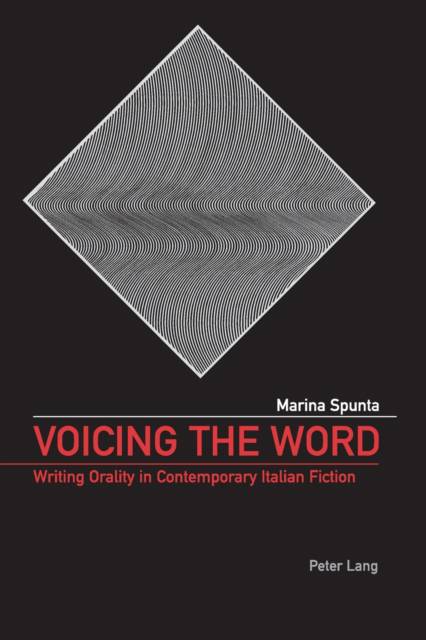
Drawing on the recent renewal of interest in the debate on orality and literacy this book investigates the varying perceptions and representations of orality in contemporary Italian fiction, providing a fresh perspective on this rich and fast-developing debate and on the study of the Italian literary language. The book brings together a number of complementary approaches to orality from the fields of linguistics, literary and media studies and offers a detailed analysis of a broad variety of authors and texts that appeared over the last three decades - ranging from internationally acclaimed writers such as Celati, Duranti and Tabucchi, through De Luca and Baricco, to the latest generation of writers, such as Campo, Ballestra and Nove. By exploring the complementary facets of Italian orality, and its diachronical developments since the seventies, this study questions the traditionally dichotomic approach to the study of orality and literacy and posits a more flexible, cross-modal approach that accounts for the increasing hybridisation of text forms and media and for the greater interaction between the spoken and the written as well as their representations.
Specificaties
Betrokkenen
- Auteur(s):
- Uitgeverij:
Inhoud
- Aantal bladzijden:
- 362
- Taal:
- Engels
Eigenschappen
- Productcode (EAN):
- 9783039102518
- Verschijningsdatum:
- 14/06/2004
- Uitvoering:
- Paperback
- Formaat:
- Trade paperback (VS)
- Afmetingen:
- 152 mm x 229 mm
- Gewicht:
- 485 g


Alleen bij Standaard Boekhandel
+ 362 punten op je klantenkaart van Standaard Boekhandel
SOLDEN


Beoordelingen
We publiceren alleen reviews die voldoen aan de voorwaarden voor reviews. Bekijk onze voorwaarden voor reviews.