


- Afhalen na 1 uur in een winkel met voorraad
- Gratis thuislevering in België vanaf € 30
- Ruim aanbod met 7 miljoen producten
- Afhalen na 1 uur in een winkel met voorraad
- Gratis thuislevering in België vanaf € 30
- Ruim aanbod met 7 miljoen producten





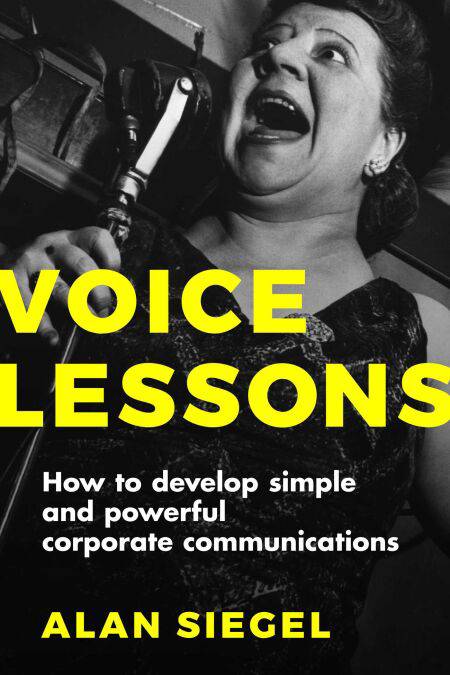
Voice Lessons E-BOOK
How to Develop Simple and Powerful Corporate Communications
Alan Siegel
E-book | Engels
€ 19,00
+ 19 punten
Uitvoering
Omschrijving
Join one of the best-known figures in branding on a journey of how to develop your brand voice in the digital age.
Sadly, the majority of brand messages fail to achieve the most essential tasks of communication. They lack clarity. They pose conflicting messages. They often don’t even pay lip service to integrated themes. The most effective brand voice is the result of a singular and powerful vision that is nurtured in environments that encourage innovation and excellence in communication. Over the last twenty years, the digital revolution has raised the din of marketing communications exponentially, radically altering the messaging environment with its speed, novelty and noise. Every marketer needs to recalibrate their brand voice to find the right pitch and tone, and the ideal volume to be heard. A fully developed voice drives all communications to project a distinct personality that reinforces customer interactions. It’s a “red thread” running through every touch-point, beyond advertising and media to embrace reputation and crisis management.
Nearly four decades ago, Alan Siegel made a presentation that captured the attention of the marketing and advertising community. The subject was Brand Voice. All too often, Brand Voice is watered down to a single page of overused words—innovative, human, and collaborative—that are supposed to drive the tone and character of the communications. So it’s not surprising that most brand Voices are predictable, uninspired, generic and often incoherent. This is especially relevant today as the focus shifts from what brands communicate to how brands communicate.
Voice Lessons explores Voice in the context of the global marketplace, focusing on how social media and the Internet make it more challenging to develop a distinctive Voice.
For corporations, political parties, candidates, doctors, or individuals, navigating the complexity of the exploding media landscape is extremely challenging. Brands must deal with massive fragmentation across the proliferation of mobile, social media platforms, pay TV services, etc.
Virtually all voice programs today are structured around three or four words that provide direction for the tone of the text in communications programs. What is needed for organizations, professions and individuals is a more robust approach to building a voice that projects identity —fusing purpose, positioning, messaging, customer interactions and visual style. The essence of an effective voice addresses WHAT you say and how you BEHAVE, not merely how you speak.
In Voice Lessons, brand expert Alan Siegel teaches that your voice is the vehicle that defines and drives how you project your organizational identity and personality, conveys your messages and follow through—whether a corporation, physician, or student writing an essay for your college application.
Sadly, the majority of brand messages fail to achieve the most essential tasks of communication. They lack clarity. They pose conflicting messages. They often don’t even pay lip service to integrated themes. The most effective brand voice is the result of a singular and powerful vision that is nurtured in environments that encourage innovation and excellence in communication. Over the last twenty years, the digital revolution has raised the din of marketing communications exponentially, radically altering the messaging environment with its speed, novelty and noise. Every marketer needs to recalibrate their brand voice to find the right pitch and tone, and the ideal volume to be heard. A fully developed voice drives all communications to project a distinct personality that reinforces customer interactions. It’s a “red thread” running through every touch-point, beyond advertising and media to embrace reputation and crisis management.
Nearly four decades ago, Alan Siegel made a presentation that captured the attention of the marketing and advertising community. The subject was Brand Voice. All too often, Brand Voice is watered down to a single page of overused words—innovative, human, and collaborative—that are supposed to drive the tone and character of the communications. So it’s not surprising that most brand Voices are predictable, uninspired, generic and often incoherent. This is especially relevant today as the focus shifts from what brands communicate to how brands communicate.
Voice Lessons explores Voice in the context of the global marketplace, focusing on how social media and the Internet make it more challenging to develop a distinctive Voice.
For corporations, political parties, candidates, doctors, or individuals, navigating the complexity of the exploding media landscape is extremely challenging. Brands must deal with massive fragmentation across the proliferation of mobile, social media platforms, pay TV services, etc.
Virtually all voice programs today are structured around three or four words that provide direction for the tone of the text in communications programs. What is needed for organizations, professions and individuals is a more robust approach to building a voice that projects identity —fusing purpose, positioning, messaging, customer interactions and visual style. The essence of an effective voice addresses WHAT you say and how you BEHAVE, not merely how you speak.
In Voice Lessons, brand expert Alan Siegel teaches that your voice is the vehicle that defines and drives how you project your organizational identity and personality, conveys your messages and follow through—whether a corporation, physician, or student writing an essay for your college application.
Specificaties
Betrokkenen
- Auteur(s):
- Uitgeverij:
Inhoud
- Aantal bladzijden:
- 240
- Taal:
- Engels
Eigenschappen
- Productcode (EAN):
- 9781510766952
- Verschijningsdatum:
- 5/04/2027
- Uitvoering:
- E-book
- Beveiligd met:
- Adobe DRM
- Formaat:
- ePub



Alleen bij Standaard Boekhandel
+ 19 punten op je klantenkaart van Standaard Boekhandel
CADEAU

AANGERADEN


Beoordelingen
We publiceren alleen reviews die voldoen aan de voorwaarden voor reviews. Bekijk onze voorwaarden voor reviews.