


- Afhalen na 1 uur in een winkel met voorraad
- Gratis thuislevering in België vanaf € 30
- Ruim aanbod met 7 miljoen producten
- Afhalen na 1 uur in een winkel met voorraad
- Gratis thuislevering in België vanaf € 30
- Ruim aanbod met 7 miljoen producten





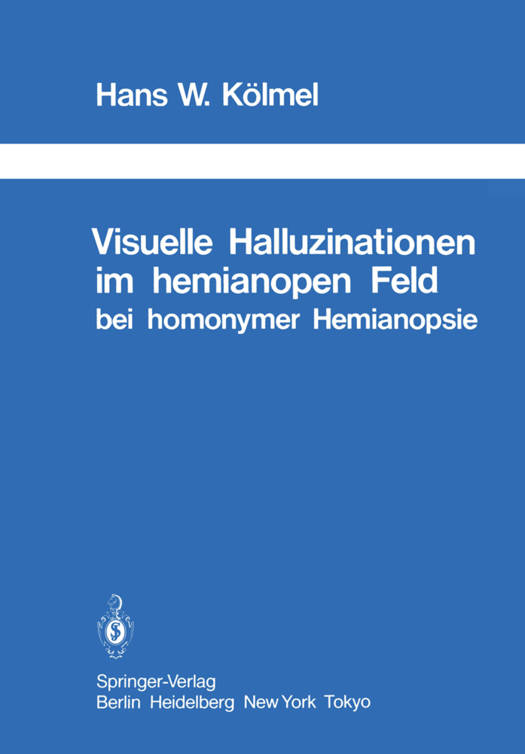
Visuelle Halluzinationen Im Hemianopen Feld Bei Homonymer Hemianopsie
H W Kölmel
€ 79,19
+ 158 punten
Omschrijving
Highest level disorders of vision constitute a topic that is allur ing, being obscure or even mysterious. For well over a century, neurologists have minutely studied visual receptors, the trans mission of the impulse, the vagaries of ocular movements and pupillary anomalies, but they have relatively neglected the prob lems of what supervenes when disease affiicts the most caudal areas of the visual apparatus. Even the drama of total blindness is something from which neuro-ophthalmologists have tended to avert their gaze. We still await a definitive, single-author work embracing the whole gamut of centrally induced affections of sight. These remarks do not overlook the numerous communica tions, even major works, dealing with some isolated aspect of disordered visual perception. The German language literature has been outstanding in such intimate and exciting studies of various facets of a clinical gem elaborately cut. Dr. K6lmel's monograph bears out these yiews. Without re sort to experimentation - for in such a project no animal model exists - the researcher has had to rely upon his clinical skills. Of vital importance was the information volunteered by the patient whose experiences are so bizarre, so unexpected as to exceed the victim's command of verbal expression. Being in essence purely subjective, their nature and indeed their very existence cannot be established unequivocally. Caveat auditor. Here is where the investigator's experience and clinical skill comes into play."
Specificaties
Betrokkenen
- Auteur(s):
- Uitgeverij:
Inhoud
- Aantal bladzijden:
- 122
- Taal:
- Duits
- Reeks:
- Reeksnummer:
- nr. 26
Eigenschappen
- Productcode (EAN):
- 9783642493140
- Verschijningsdatum:
- 21/04/2012
- Uitvoering:
- Paperback
- Formaat:
- Trade paperback (VS)
- Afmetingen:
- 170 mm x 244 mm
- Gewicht:
- 222 g


Alleen bij Standaard Boekhandel
+ 158 punten op je klantenkaart van Standaard Boekhandel
Wedstrijd


Beoordelingen
We publiceren alleen reviews die voldoen aan de voorwaarden voor reviews. Bekijk onze voorwaarden voor reviews.