


- Afhalen na 1 uur in een winkel met voorraad
- Gratis thuislevering in België vanaf € 30
- Ruim aanbod met 7 miljoen producten
- Afhalen na 1 uur in een winkel met voorraad
- Gratis thuislevering in België vanaf € 30
- Ruim aanbod met 7 miljoen producten





Omschrijving
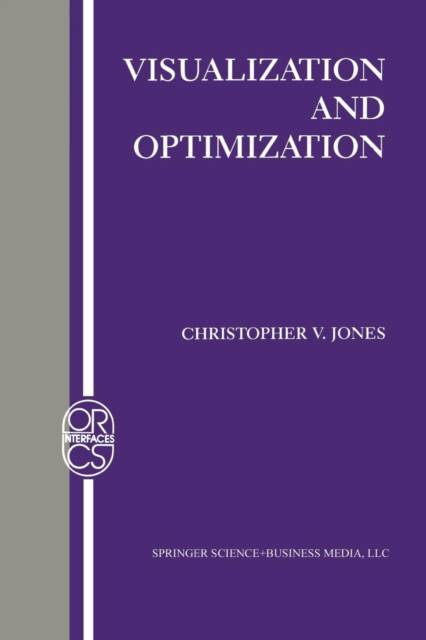
This book arose out of an invited feature article on visualization and opti- mization that appeared in the ORSA Journal on Computing in 1994. That article briefly surveyed the current state of the art in visualization as it ap- plied to optimization. In writing the feature article, it became clear that there was much more to say. Apparently others agreed, and thus this book was born. The book is targeted primarily towards the optimization community rather than the visualization community. Although both optimization and visualization both seek to help people understand complex problems, prac- titioners in one field are generally unaware of work in the other field. Given the common goals of the respective fields, it seemed fruitful to consider how each can contribute to the other. One might argue that this book should not be focused specifically on optimization but on decision making in general. Perhaps, but it seems that there is sufficient material to create a book targeted specifically to optimization. Certainly many of the ideas presented in the book are appli- cable to other areas, including computer simulation, decision theory and stochastic modeling. Another book could discuss the use of visualization in these areas.
Specificaties
Betrokkenen
- Auteur(s):
- Uitgeverij:
Inhoud
- Aantal bladzijden:
- 434
- Taal:
- Engels
- Reeks:
- Reeksnummer:
- nr. 6
Eigenschappen
- Productcode (EAN):
- 9781461368489
- Verschijningsdatum:
- 2/11/2012
- Uitvoering:
- Paperback
- Formaat:
- Trade paperback (VS)
- Afmetingen:
- 156 mm x 234 mm
- Gewicht:
- 625 g



Alleen bij Standaard Boekhandel
+ 307 punten op je klantenkaart van Standaard Boekhandel
Cadeau

AANGERADEN


Beoordelingen
We publiceren alleen reviews die voldoen aan de voorwaarden voor reviews. Bekijk onze voorwaarden voor reviews.