


- Afhalen na 1 uur in een winkel met voorraad
- Gratis thuislevering in België vanaf € 30
- Ruim aanbod met 7 miljoen producten
- Afhalen na 1 uur in een winkel met voorraad
- Gratis thuislevering in België vanaf € 30
- Ruim aanbod met 7 miljoen producten





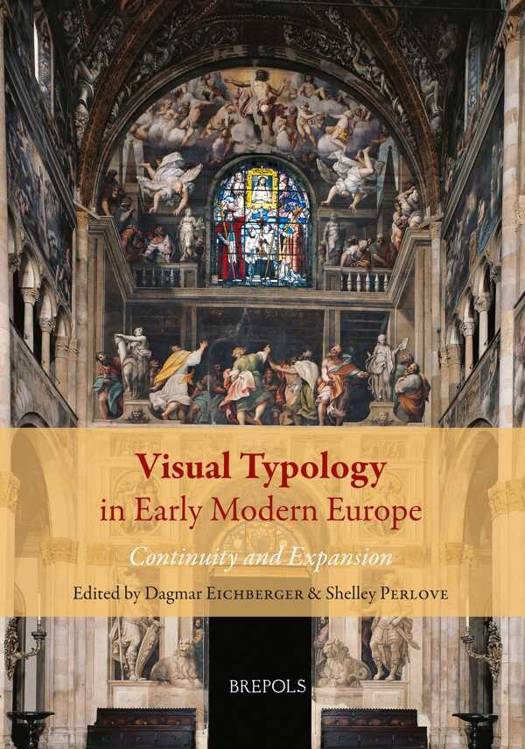
Visual Typology in Early Modern Europe
Continuity and Expansion
Dagmar Eichberger
Hardcover | Engels
€ 111,30
+ 222 punten
Omschrijving
Visual Typology in early Modern Europe: Continuity and Expansion is the first study that examines the varied manifestations of typological thinking in diverse media of the visual arts from the Late Middle Ages through the seventeenth century in Germany, The Netherlands, Italy, and France. This study counteracts the underlying misconception that typology was in decline or even ceased to exist in the sixteenth century. The studies within this volume offer new interpretations that redefine what is meant by typological thinking in the early modern period. Typological thinking informs traditional pre-figurations, as well as more broadly associative interconnections between the Old Testament, classical texts, and even natural history, in relation to the New Testament. Typological thought permeates religious and secular visual culture during the period under consideration and this collection of essays reveals the continuing relevance and expansion of typological patterns for the visual arts, with particular emphasis on innovations in the sixteenth century. In the course of the sixteenth century typology became more complex and flexible, and came under the influence of the writings of Protestant and Catholic reformers, and also derived new secular and political analogies. Each essay offers a different interpretation of typological thinking. The typological manuals that were written in the course of the Late Middle Ages remain the basis for many artistic projects in illuminated manuscripts, stained glass windows, sculpture, and painting. By the sixteenth century, the notion of type and antitype was so well embedded in thought that artists such as Brueghel and Lucas van Leyden implicitly evoked typological relationships. Before the Council of Trent, more allusive interpretations led to unorthodox pairings of images from secular and religious contexts. In the first half of the sixteenth century new relationships were developed by Protestant commentators. After the Council of Trent the Catholic Church returned to more traditional typological forms and established new guidelines for reading devotional images. Nonetheless, artists continued to pursue unorthodox, innovative pairings.
Specificaties
Betrokkenen
- Auteur(s):
- Uitgeverij:
Inhoud
- Aantal bladzijden:
- 371
- Taal:
- Engels
Eigenschappen
- Productcode (EAN):
- 9782503545509
- Verschijningsdatum:
- 25/10/2018
- Uitvoering:
- Hardcover
- Formaat:
- Genaaid
- Afmetingen:
- 188 mm x 259 mm
- Gewicht:
- 1202 g


Alleen bij Standaard Boekhandel
+ 222 punten op je klantenkaart van Standaard Boekhandel
Cadeau

AANGERADEN


Beoordelingen
We publiceren alleen reviews die voldoen aan de voorwaarden voor reviews. Bekijk onze voorwaarden voor reviews.