


- Afhalen na 1 uur in een winkel met voorraad
- Gratis thuislevering in België vanaf € 30
- Ruim aanbod met 7 miljoen producten
- Afhalen na 1 uur in een winkel met voorraad
- Gratis thuislevering in België vanaf € 30
- Ruim aanbod met 7 miljoen producten





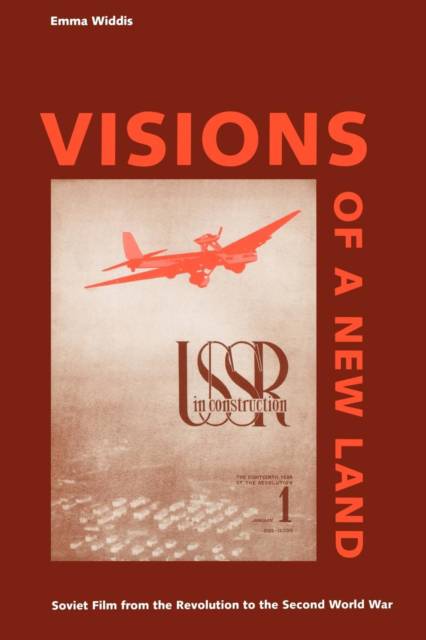
Visions of a New Land
Soviet Film from the Revolution to the Second World War
Emma Widdis
Paperback | Engels
€ 64,45
+ 128 punten
Omschrijving
In 1917 the Bolsheviks proclaimed a world remade. The task of the new regime, and of the media that served it, was to reshape the old world in revolutionary form, to transform the vast, "ungraspable" space of the Russian Empire into the mapped territory of the Soviet Union. This book shows how Soviet cinema encouraged popular support for state initiatives in the years between the revolution and the Second World War, helping to create a new Russian identity and territory-an "imaginary geography" of Sovietness. Drawing on a vast range of little-known texts, Emma Widdis offers a unique cultural history of the early Soviet period. In particular, she shows how films projected the new Soviet map onto the great shared screen of the popular imagination.
Specificaties
Betrokkenen
- Auteur(s):
- Uitgeverij:
Inhoud
- Aantal bladzijden:
- 272
- Taal:
- Engels
Eigenschappen
- Productcode (EAN):
- 9780300194692
- Verschijningsdatum:
- 19/10/2012
- Uitvoering:
- Paperback
- Formaat:
- Trade paperback (VS)
- Afmetingen:
- 152 mm x 229 mm
- Gewicht:
- 367 g


Alleen bij Standaard Boekhandel
+ 128 punten op je klantenkaart van Standaard Boekhandel
Cadeau

AANGERADEN


Beoordelingen
We publiceren alleen reviews die voldoen aan de voorwaarden voor reviews. Bekijk onze voorwaarden voor reviews.