



Bedankt voor het vertrouwen het afgelopen jaar! Om jou te bedanken bieden we GRATIS verzending (in België) aan op alles gedurende de hele maand januari.
- Afhalen na 1 uur in een winkel met voorraad
- In januari gratis thuislevering in België
- Ruim aanbod met 7 miljoen producten
Bedankt voor het vertrouwen het afgelopen jaar! Om jou te bedanken bieden we GRATIS verzending (in België) aan op alles gedurende de hele maand januari.
- Afhalen na 1 uur in een winkel met voorraad
- In januari gratis thuislevering in België
- Ruim aanbod met 7 miljoen producten





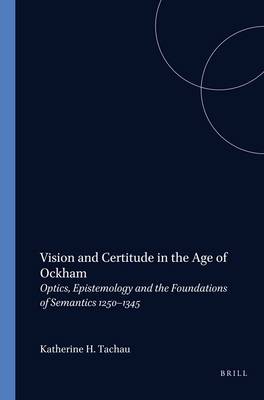
Vision and Certitude in the Age of Ockham
Optics, Epistemology and the Foundation of Semantics 1250-1345
Katherine Tachau
€ 436,95
+ 873 punten
Omschrijving
When William of Ockham lectured on Lombard's Sentences in 1317-1319, he articulated a new theory of knowledge. Its reception by fourteenth-century scholars was, however, largely negative, for it conflicted with technical accounts of vision and with their interprations of Duns Scotus.
This study begins with Roger Bacon, a major source for later scholastics' efforts to tie a complex of semantic and optical explanations together into an account of concept formation, truth and the acquisition of certitude. After considering the challenges of Peter Olivi and Henry of Ghent, Part I concludes with a discussion of Scotus's epistemology. Part II explores the alternative theories of Peter Aureol and William of Ockham. Part III traces the impact of Scotus, and then of Aureol, on Oxford thought in the years of Ockham's early audience, culminating with the views of Adam Wodeham. Part IV concerns Aureol's intellectual legacy at Paris, the introduction of Wodeham's thought there, and Autrecourt's controversies.
This study begins with Roger Bacon, a major source for later scholastics' efforts to tie a complex of semantic and optical explanations together into an account of concept formation, truth and the acquisition of certitude. After considering the challenges of Peter Olivi and Henry of Ghent, Part I concludes with a discussion of Scotus's epistemology. Part II explores the alternative theories of Peter Aureol and William of Ockham. Part III traces the impact of Scotus, and then of Aureol, on Oxford thought in the years of Ockham's early audience, culminating with the views of Adam Wodeham. Part IV concerns Aureol's intellectual legacy at Paris, the introduction of Wodeham's thought there, and Autrecourt's controversies.
Specificaties
Betrokkenen
- Auteur(s):
- Uitgeverij:
Inhoud
- Aantal bladzijden:
- 452
- Taal:
- Engels
- Reeks:
- Reeksnummer:
- nr. 22
Eigenschappen
- Productcode (EAN):
- 9789004085527
- Verschijningsdatum:
- 31/08/2000
- Uitvoering:
- Paperback
- Formaat:
- Trade paperback (VS)
- Afmetingen:
- 161 mm x 240 mm
- Gewicht:
- 811 g


Alleen bij Standaard Boekhandel
+ 873 punten op je klantenkaart van Standaard Boekhandel
SOLDEN


Beoordelingen
We publiceren alleen reviews die voldoen aan de voorwaarden voor reviews. Bekijk onze voorwaarden voor reviews.