


- Afhalen na 1 uur in een winkel met voorraad
- Gratis thuislevering in België vanaf € 30
- Ruim aanbod met 7 miljoen producten
- Afhalen na 1 uur in een winkel met voorraad
- Gratis thuislevering in België vanaf € 30
- Ruim aanbod met 7 miljoen producten





€ 49,95
+ 99 punten
Eenvoudig bestellen
Veilig betalen


Gratis thuislevering vanaf € 30 (via bpost)
Gratis levering in je Standaard Boekhandel
Omschrijving
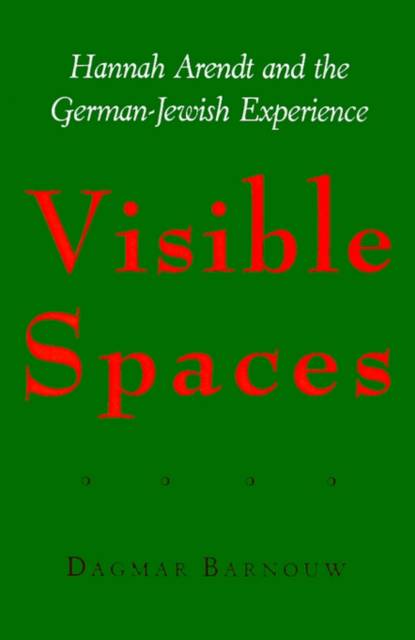
Hannah Arendt still makes people angry. Her writings on the modern German-Jewish experience are deliberately challenging -- and sometimes shocking -- to an audience used to thinking of the Jewish people as the victims of history. Visible Spaces is the most ambitious attempt to date to explore the origins and implications of Arendt's political thought. Dagmar Barnouw, an admiring yet critical reader, draws extensively on unpublished archival materials relating to the Jewish experience in modern Germany and its influence on Arendt's political philosophy. Arendt's work is discussed chronologically, from Origins of Totalitarianism to The Human Condition and the unfinished Life of the Mind. Barnouw also offers a challenging reassessment of Arendt's well-known report on the Eichmann trial. The result is an insightful study of Arendt's thought in its complex historical context.
Specificaties
Betrokkenen
- Auteur(s):
- Uitgeverij:
Inhoud
- Aantal bladzijden:
- 336
- Taal:
- Engels
- Reeks:
Eigenschappen
- Productcode (EAN):
- 9780801862830
- Verschijningsdatum:
- 20/01/2000
- Uitvoering:
- Paperback
- Formaat:
- Trade paperback (VS)
- Afmetingen:
- 154 mm x 230 mm
- Gewicht:
- 562 g


Alleen bij Standaard Boekhandel
+ 99 punten op je klantenkaart van Standaard Boekhandel
CADEAU

AANGERADEN


Beoordelingen
We publiceren alleen reviews die voldoen aan de voorwaarden voor reviews. Bekijk onze voorwaarden voor reviews.