


- Afhalen na 1 uur in een winkel met voorraad
- Gratis thuislevering in België vanaf € 30
- Ruim aanbod met 7 miljoen producten
- Afhalen na 1 uur in een winkel met voorraad
- Gratis thuislevering in België vanaf € 30
- Ruim aanbod met 7 miljoen producten





€ 95,45
+ 190 punten
Omschrijving
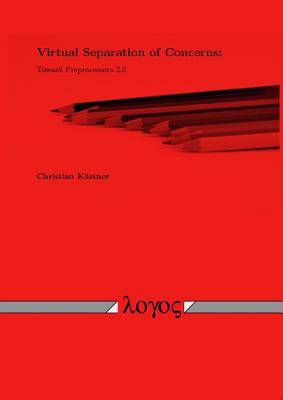
Conditional compilation with preprocessors like cpp is a simple but effective means to implement variability. By annotating code fragments with #ifdef and #endif directives, different program variants with or without these fragments can be created, which can be used (among others) to implement software product lines. Although, preprocessors are frequently used in practice, they are often criticized for their negative effect on code quality and maintainability. In contrast to modularized implementations, for example using components or aspects, preprocessors neglect separation of concerns, are prone to introduce subtle errors, can entirely obfuscate the source code, and limit reuse. Our aim is to rehabilitate the preprocessor by showing how simple tool support can address these problems and emulate some benefits of modularized implementations. At the same time we emphasize unique benefits of annotations, including simplicity, expressiveness, and being language independent. Our goal is to rehabilitate preprocessors and show that they are not a lost cause as many researchers think. On the contrary, we argue that - with the presented improvements - annotation-based approaches are a serious alternative for product-line implementation.
Specificaties
Betrokkenen
- Auteur(s):
- Uitgeverij:
Inhoud
- Aantal bladzijden:
- 224
- Taal:
- Engels
Eigenschappen
- Productcode (EAN):
- 9783832525279
- Verschijningsdatum:
- 20/08/2010
- Uitvoering:
- Paperback
- Formaat:
- Trade paperback (VS)
- Afmetingen:
- 145 mm x 211 mm
- Gewicht:
- 284 g


Alleen bij Standaard Boekhandel
+ 190 punten op je klantenkaart van Standaard Boekhandel

Beoordelingen
We publiceren alleen reviews die voldoen aan de voorwaarden voor reviews. Bekijk onze voorwaarden voor reviews.