


- Afhalen na 1 uur in een winkel met voorraad
- Gratis thuislevering in België vanaf € 30
- Ruim aanbod met 7 miljoen producten
- Afhalen na 1 uur in een winkel met voorraad
- Gratis thuislevering in België vanaf € 30
- Ruim aanbod met 7 miljoen producten





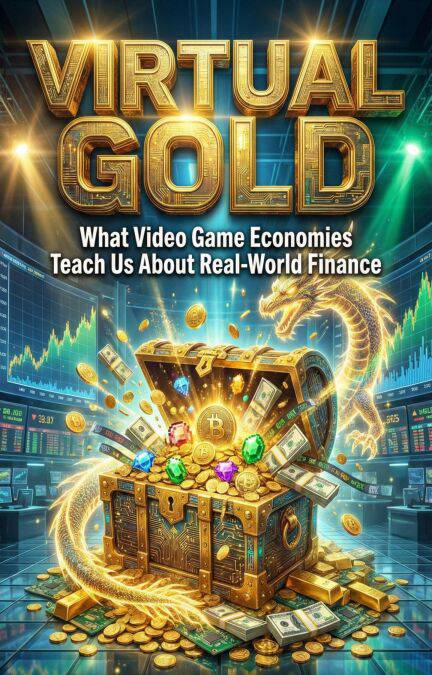
Virtual Gold E-BOOK
What Video Game Economies Teach Us About Real-World Finance
Michael Chen
E-book | Engels
€ 4,99
+ 4 punten
Omschrijving
In 2008, when the real world was in financial collapse, the economy of the game EVE Online was thriving. Economist Michael Chen takes readers inside the complex financial systems of Massively Multiplayer Online games (MMOs) in "Virtual Gold."
Chen explains how virtual worlds grapple with hyperinflation (when monsters drop too much gold), scarcity, and trade wars. He details the rise of "gold farming" sweatshops in developing nations and the black market for digital items. The book uses examples like the "Corrupted Blood" incident in World of Warcraft to model epidemiological and economic contagion.
"Virtual Gold" argues that these "play" economies are actually high-speed simulations of real-world capitalism. They test theories about Universal Basic Income, taxation, and unregulated markets faster than any university study. Chen predicts that as the Metaverse grows, the line between virtual currency and real rent will vanish completely.
Chen explains how virtual worlds grapple with hyperinflation (when monsters drop too much gold), scarcity, and trade wars. He details the rise of "gold farming" sweatshops in developing nations and the black market for digital items. The book uses examples like the "Corrupted Blood" incident in World of Warcraft to model epidemiological and economic contagion.
"Virtual Gold" argues that these "play" economies are actually high-speed simulations of real-world capitalism. They test theories about Universal Basic Income, taxation, and unregulated markets faster than any university study. Chen predicts that as the Metaverse grows, the line between virtual currency and real rent will vanish completely.
Specificaties
Betrokkenen
- Auteur(s):
- Uitgeverij:
Inhoud
- Aantal bladzijden:
- 199
- Taal:
- Engels
Eigenschappen
- Productcode (EAN):
- 9783565213085
- Verschijningsdatum:
- 29/01/2026
- Uitvoering:
- E-book
- Formaat:
- ePub


Alleen bij Standaard Boekhandel
+ 4 punten op je klantenkaart van Standaard Boekhandel

Beoordelingen
We publiceren alleen reviews die voldoen aan de voorwaarden voor reviews. Bekijk onze voorwaarden voor reviews.