


- Afhalen na 1 uur in een winkel met voorraad
- Gratis thuislevering in België vanaf € 30
- Ruim aanbod met 7 miljoen producten
- Afhalen na 1 uur in een winkel met voorraad
- Gratis thuislevering in België vanaf € 30
- Ruim aanbod met 7 miljoen producten





€ 54,95
+ 109 punten
Omschrijving
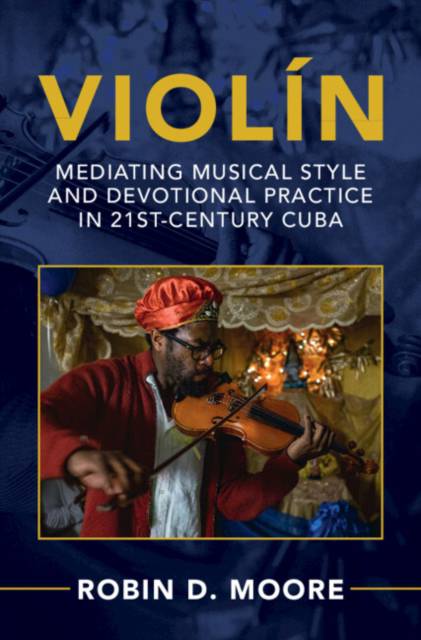
Afrodescendant religious music in the Caribbean and Latin America typically foregrounds drumming and centuries-old songs of praise to spirit deities. In recent years, a new form of worship, known as a violín or toque de violín, which features the violin alongside the guitar, electronic piano, and/or other instruments commonly associated with popular music, has gained popularity in Cuba. Violines can be understood as loosely defined spaces for performance that developed in a context of cultural oppression and dominance. They can be viewed as a concession to Eurocentric and secular tastes, or as a blackening/creolizing of those same practices, or both. They express religious faith in pluralistic ways, incorporating repertoire from various Black religions alongside influences from folk Catholicism, and classical, commercial, and folkloric music. Drawing from an encyclopedic knowledge of Cuban music, ethnographic work, and interviews, Robin D. Moore's groundbreaking book is the first to explore the compelling violín ceremony in detail.
Specificaties
Betrokkenen
- Auteur(s):
- Uitgeverij:
Inhoud
- Aantal bladzijden:
- 246
- Taal:
- Engels
- Reeks:
Eigenschappen
- Productcode (EAN):
- 9781009584012
- Verschijningsdatum:
- 20/11/2025
- Uitvoering:
- Paperback
- Formaat:
- Trade paperback (VS)
- Afmetingen:
- 152 mm x 229 mm
- Gewicht:
- 335 g



Alleen bij Standaard Boekhandel
+ 109 punten op je klantenkaart van Standaard Boekhandel
Cadeau

AANGERADEN


Beoordelingen
We publiceren alleen reviews die voldoen aan de voorwaarden voor reviews. Bekijk onze voorwaarden voor reviews.