


- Afhalen na 1 uur in een winkel met voorraad
- Gratis thuislevering in België vanaf € 30
- Ruim aanbod met 7 miljoen producten
- Afhalen na 1 uur in een winkel met voorraad
- Gratis thuislevering in België vanaf € 30
- Ruim aanbod met 7 miljoen producten





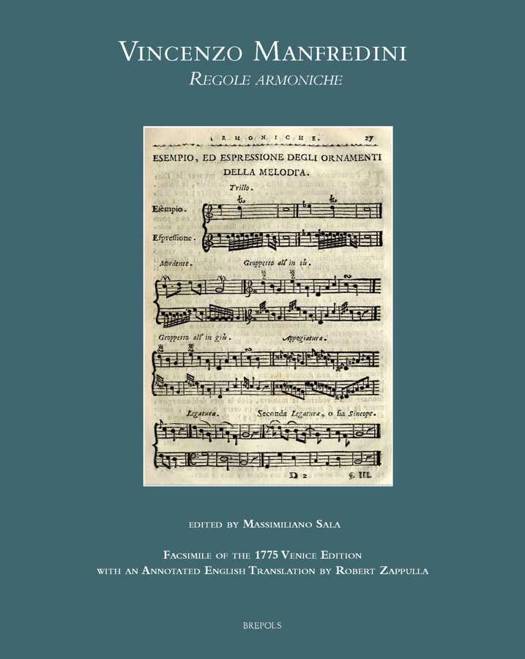
Vincenzo Manfredini, Regole armoniche
Massimiliano Sala
€ 137,80
+ 275 punten
Omschrijving
A composer of, amongst other things, operas, ballets, symphonies, string quartets and harpsichord sonatas, Vincenzo Manfredini eventually turned to writing about music. His Regole armoniche is an important source of information on eighteenth-century performing practices. In this work he summarizes all of the rules surrounding accompaniment illustrating them with written-out realizations. He is, quite possibly, the only Italian author of an accompaniment treatise to take this approach. His comments on singing sparked controversial exchanges between the Italian castrato Giovanni Battista Mancini and Esteban de Arteaga. The volume aims to investigate the genesis and the role of Regole armoniche in the light of theoretical concepts and debates within eighteenth-century musical spheres. The volume is divided into three parts: firstly, an opening collection of critical essays (by Gregory Barnett, Jean Grundy Fanelli, Rudolf Rasch and Peter Walls) concerning Manfredini's life, his output and his intellectual inclinations; secondly, a facsimile edition and finally, an annotated edition whose translation into English is long overdue.
Specificaties
Betrokkenen
- Auteur(s):
- Uitgeverij:
Inhoud
- Aantal bladzijden:
- 350
- Taal:
- Frans
- Reeks:
- Reeksnummer:
- nr. 1
Eigenschappen
- Productcode (EAN):
- 9782503548838
- Verschijningsdatum:
- 5/12/2013
- Uitvoering:
- Hardcover
- Formaat:
- Genaaid
- Afmetingen:
- 211 mm x 267 mm
- Gewicht:
- 1179 g



Alleen bij Standaard Boekhandel
+ 275 punten op je klantenkaart van Standaard Boekhandel
Cadeau

AANGERADEN


Beoordelingen
We publiceren alleen reviews die voldoen aan de voorwaarden voor reviews. Bekijk onze voorwaarden voor reviews.