


- Afhalen na 1 uur in een winkel met voorraad
- Gratis thuislevering in België vanaf € 30
- Ruim aanbod met 7 miljoen producten
- Afhalen na 1 uur in een winkel met voorraad
- Gratis thuislevering in België vanaf € 30
- Ruim aanbod met 7 miljoen producten




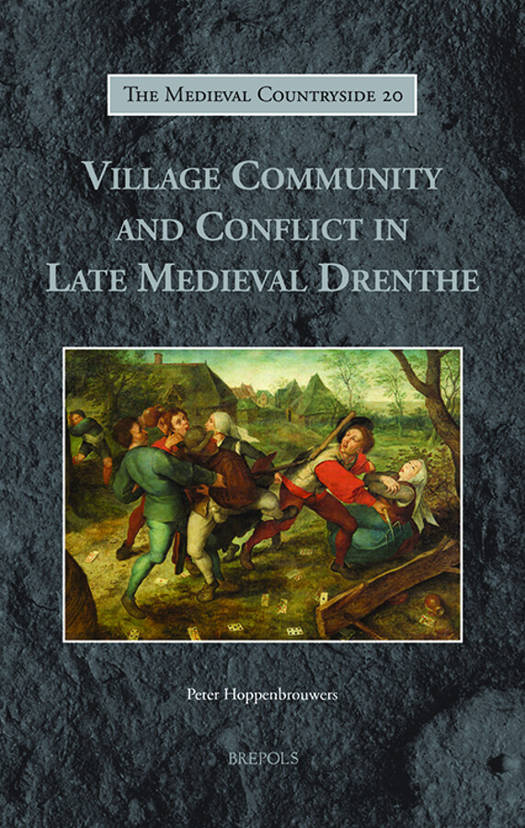
Village Community and Conflict in Late Medieval Drenthe
Peter CM Hoppenbrouwers
€ 116,60
+ 233 punten
Omschrijving
Village communities were the heart of the medieval countryside. But how did they operate? This book seeks to find some answers to that question by focusing on late medieval Drenthe, a region situated in a remote corner of the Holy Roman Empire and part of the prince-bishopric of Utrecht. Drenthe was an overwhelmingly localized, rural world. It had no cities, and consisted entirely of small villages. The social and economic importance of traditionally privileged sections of medieval society (clergy and nobility) was limited; free peasant landowners were the dominant social class. Based on a careful reading of normative sources (Land charters) and thousands of short verdicts given by the so-called 'Etstoel' or high court of justice in Drenthe, this book focuses on three types of conflict: conflicts between villages, feud-like violence, and litigations about property. These three types coincide with three levels of involvement: that of village communities as a whole, that of kin groups, and that of households. The resulting, comprehensive analysis provides a rigorous interrogation of generalized notions of the pre-industrial rural world, offering a snapshot of a typical peasant society in late medieval Europe.
Specificaties
Betrokkenen
- Auteur(s):
- Uitgeverij:
Inhoud
- Aantal bladzijden:
- 384
- Taal:
- Engels
- Reeks:
- Reeksnummer:
- nr. 20
Eigenschappen
- Productcode (EAN):
- 9782503575391
- Verschijningsdatum:
- 16/07/2018
- Uitvoering:
- Hardcover
- Formaat:
- Genaaid
- Afmetingen:
- 165 mm x 239 mm
- Gewicht:
- 816 g


Alleen bij Standaard Boekhandel
+ 233 punten op je klantenkaart van Standaard Boekhandel
Cadeau

AANGERADEN


Beoordelingen
We publiceren alleen reviews die voldoen aan de voorwaarden voor reviews. Bekijk onze voorwaarden voor reviews.