


- Afhalen na 1 uur in een winkel met voorraad
- Gratis thuislevering in België vanaf € 30
- Ruim aanbod met 7 miljoen producten
- Afhalen na 1 uur in een winkel met voorraad
- Gratis thuislevering in België vanaf € 30
- Ruim aanbod met 7 miljoen producten





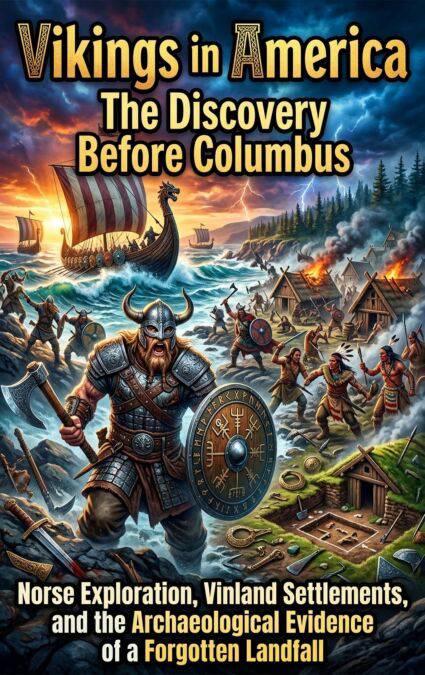
Vikings in America: The Discovery Before Columbus E-BOOK
Norse Exploration, Vinland Settlements, and the Archaeological Evidence of a Forgotten Landfall
Adrian Wells
E-book | Engels
€ 8,99
+ 8 punten
Omschrijving
Five centuries before Columbus crossed the Atlantic, Norse sailors had already walked the shores of North America. The sagas called it Vinland — a land of timber, wild grapes, and fierce indigenous resistance — and for decades historians treated these accounts as legend. The 1960 excavation of L'Anse aux Meadows in Newfoundland changed that permanently, producing the first confirmed archaeological evidence of European presence in the Americas predating 1492.
This book reconstructs the Norse Atlantic expansion through the Vinland Sagas, Icelandic chronicles, and four decades of archaeological fieldwork — tracing the voyages of Leif Eriksson, Thorvald, and Gudrid Thorbjarnardóttir across Greenland and into the North American coastline. It examines what the Norse found, how they interacted with indigenous Beothuk and Dorset peoples, and why their settlements ultimately did not survive.
The narrative situates Vinland within the broader pattern of Viking expansion: the same restless navigational culture that reached Iceland, Greenland, Constantinople, and Baghdad also touched the Americas — driven by the same combination of overpopulation, trade ambition, and extraordinary seafaring capability. It also examines what the Norse failure to establish permanent settlements reveals about the limits of expansion without the demographic and institutional support that later European colonization would bring.
A rigorously sourced account of a genuine historical discovery, and of the long process by which archaeology finally confirmed what the sagas had preserved.
This book reconstructs the Norse Atlantic expansion through the Vinland Sagas, Icelandic chronicles, and four decades of archaeological fieldwork — tracing the voyages of Leif Eriksson, Thorvald, and Gudrid Thorbjarnardóttir across Greenland and into the North American coastline. It examines what the Norse found, how they interacted with indigenous Beothuk and Dorset peoples, and why their settlements ultimately did not survive.
The narrative situates Vinland within the broader pattern of Viking expansion: the same restless navigational culture that reached Iceland, Greenland, Constantinople, and Baghdad also touched the Americas — driven by the same combination of overpopulation, trade ambition, and extraordinary seafaring capability. It also examines what the Norse failure to establish permanent settlements reveals about the limits of expansion without the demographic and institutional support that later European colonization would bring.
A rigorously sourced account of a genuine historical discovery, and of the long process by which archaeology finally confirmed what the sagas had preserved.
Specificaties
Betrokkenen
- Auteur(s):
- Uitgeverij:
Inhoud
- Aantal bladzijden:
- 197
- Taal:
- Engels
Eigenschappen
- Productcode (EAN):
- 9783565324613
- Verschijningsdatum:
- 13/03/2026
- Uitvoering:
- E-book
- Formaat:
- ePub


Alleen bij Standaard Boekhandel
+ 8 punten op je klantenkaart van Standaard Boekhandel
Cadeau

AANGERADEN


Beoordelingen
We publiceren alleen reviews die voldoen aan de voorwaarden voor reviews. Bekijk onze voorwaarden voor reviews.