


- Afhalen na 1 uur in een winkel met voorraad
- Gratis thuislevering in België vanaf € 30
- Ruim aanbod met 7 miljoen producten
- Afhalen na 1 uur in een winkel met voorraad
- Gratis thuislevering in België vanaf € 30
- Ruim aanbod met 7 miljoen producten





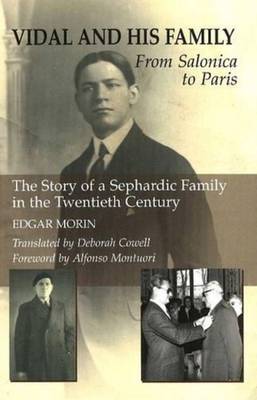
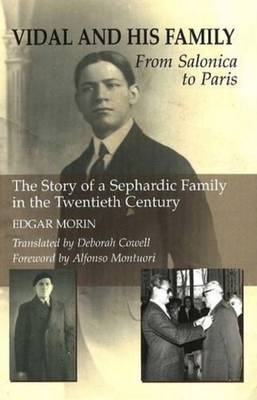
Vidal and His Family
From Salonica to Paris - The Story of a Sephardic Family in the Twentieth Century
Morin
Paperback | Engels
€ 34,95
+ 69 punten
Omschrijving
Edgar Morin, one of France's greatest living intellectuals, tells the story of his father, Vidal Nahoum, but also the story of Sephardic Jews, and of Europe. In this 'holographic history' Vidal's story, and that of his family, carries within it the flowering, decline, and death of Jewish culture in Spain, the passage from Empires to Nation States, the complex relations between Jews and Gentiles, between East and West, and, ultimately, the history of the twentieth century itself. Morin's work ranges from the great sweep of global historical events to the everyday details of individual lives, letters, feelings, reflections, and experiences. Vidal was born in 1894 in the Ottoman Empire's great Macedonian port. His great-grandfather came from Tuscany and spoke Italian. His mother tongue was fifteenth-century Spanish. He learned French and German as a child. When he was an adolescent, he dreamed of living in France; he was deported there as a prisoner, and then liberated by the French Prime Minister. He lived through the Balkan wars, the collapse of the Ottoman Empire, and two World Wars. Vidal cannot be isolated from his family. And as Edgar Morin explains, "this book also tells the stories of the men and women in his immediate family When, as his son, I inevitably come into his story... I describe him as objectively as possible. The reverence that inspired me did not call for a work of edification; it implied that I should attempt to write a truthful book. For this reason, the book is not in the least respectful, or at least not in the usual sense of the word. Vidal felt that loving someone meant being able to tease him. The author of these lines, who has inherited something of this trait, does not think it disrespectful to tease or make fun of the people he loves."
Specificaties
Betrokkenen
- Auteur(s):
- Uitgeverij:
Inhoud
- Aantal bladzijden:
- 330
- Taal:
- Engels
Eigenschappen
- Productcode (EAN):
- 9781845192747
- Verschijningsdatum:
- 15/05/2009
- Uitvoering:
- Paperback
- Formaat:
- Trade paperback (VS)
- Afmetingen:
- 152 mm x 229 mm
- Gewicht:
- 498 g


Alleen bij Standaard Boekhandel
+ 69 punten op je klantenkaart van Standaard Boekhandel
Cadeau

AANGERADEN


Beoordelingen
We publiceren alleen reviews die voldoen aan de voorwaarden voor reviews. Bekijk onze voorwaarden voor reviews.