


- Afhalen na 1 uur in een winkel met voorraad
- Gratis thuislevering in België vanaf € 30
- Ruim aanbod met 7 miljoen producten
- Afhalen na 1 uur in een winkel met voorraad
- Gratis thuislevering in België vanaf € 30
- Ruim aanbod met 7 miljoen producten





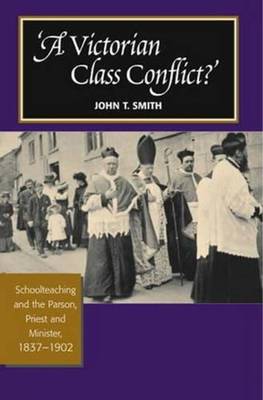
Victorian Class Conflict?
Schoolteaching & the Parson, Priest & Minister, 18371902
Smith
Paperback | Engels
€ 38,45
+ 76 punten
Uitvoering
Omschrijving
Villages and towns in the Victorian era saw a great expansion in educational provision, and witnessed the rise of the elementary teaching profession, often provided and supported by local clergymen. This book investigates the social and economic relationships of such clergymen and teachers who worked co-operatively and at times in competition with each other, their relative positions typified by the comment of one contemporary clergyman as 'those of master and servant'. The inevitable result was a complex of movements in society in the final third of the nineteenth century that led to increasing clashes in villages, as one group (the clergy) sought to preserve its hold on its status and power, while the other (male and female teachers) attempted to secure their new role in society. The research presented is based on previously unused, original sources -- church documents, HMI reports, newspapers and journals and private papers. It is not confined, as is the case with so much recent research, to the Church of England, but breaks new ground in providing a comparative analysis of the social position and educational work of Roman Catholic and Wesleyan clergy, and their collaboration with their elementary school teachers. This book is essential reading for all those interested in Victorian Education.
Specificaties
Betrokkenen
- Auteur(s):
- Uitgeverij:
Inhoud
- Aantal bladzijden:
- 233
- Taal:
- Engels
Eigenschappen
- Productcode (EAN):
- 9781845195823
- Verschijningsdatum:
- 1/10/2003
- Uitvoering:
- Paperback
- Formaat:
- Trade paperback (VS)
- Afmetingen:
- 155 mm x 229 mm
- Gewicht:
- 376 g


Alleen bij Standaard Boekhandel
+ 76 punten op je klantenkaart van Standaard Boekhandel
CADEAU

AANGERADEN


Beoordelingen
We publiceren alleen reviews die voldoen aan de voorwaarden voor reviews. Bekijk onze voorwaarden voor reviews.