


- Afhalen na 1 uur in een winkel met voorraad
- Gratis thuislevering in België vanaf € 30
- Ruim aanbod met 7 miljoen producten
- Afhalen na 1 uur in een winkel met voorraad
- Gratis thuislevering in België vanaf € 30
- Ruim aanbod met 7 miljoen producten





€ 59,14
+ 59 punten
Uitvoering
Omschrijving
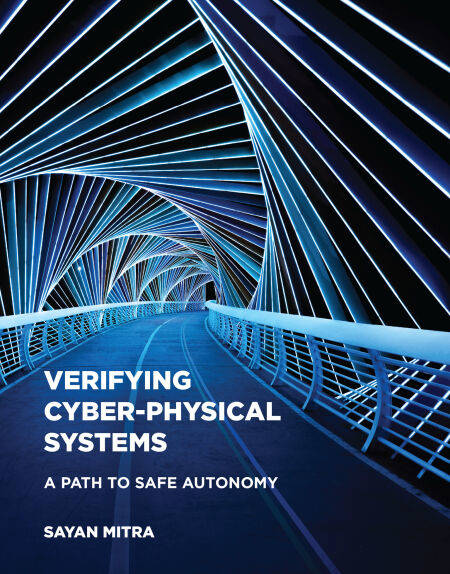
A graduate-level textbook that presents a unified mathematical framework for modeling and analyzing cyber-physical systems, with a strong focus on verification.
Verification aims to establish whether a system meets a set of requirements. For such cyber-physical systems as driverless cars, autonomous spacecraft, and air-traffic management systems, verification is key to building safe systems with high levels of assurance. This graduate-level textbook presents a unified mathematical framework for modeling and analyzing cyber-physical systems, with a strong focus on verification. It distills the ideas and algorithms that have emerged from more than three decades of research and have led to the creation of industrial-scale modeling and verification techniques for cyber-physical systems.
The book discusses such computer science concepts as undecidability and abstractions, alongside concepts from control theory including multiple Lyapunov functions and barrier certificates, all within a unified mathematical language. It explains algorithms for reachability analysis, counter-example guided abstraction refinement, and data-driven verification, as well as the key data structures that enable their effective implementation. Other topics include invariants, deductive verification, progress analysis, sensitivity analysis, simulation relations, fairness, model checking, satisfiability modulo theories, temporal logics, compositional reasoning, convergence analysis, asynchronous processes, and verification of black-box systems.The book provides more than twenty examples of cyber-physical verification, ranging from conceptual models to advanced driving-assist systems. Each chapter offers exercise problems; supporting materials, including slides, simulation code, additional exercises, and solutions are available on the book's website.
Verification aims to establish whether a system meets a set of requirements. For such cyber-physical systems as driverless cars, autonomous spacecraft, and air-traffic management systems, verification is key to building safe systems with high levels of assurance. This graduate-level textbook presents a unified mathematical framework for modeling and analyzing cyber-physical systems, with a strong focus on verification. It distills the ideas and algorithms that have emerged from more than three decades of research and have led to the creation of industrial-scale modeling and verification techniques for cyber-physical systems.
The book discusses such computer science concepts as undecidability and abstractions, alongside concepts from control theory including multiple Lyapunov functions and barrier certificates, all within a unified mathematical language. It explains algorithms for reachability analysis, counter-example guided abstraction refinement, and data-driven verification, as well as the key data structures that enable their effective implementation. Other topics include invariants, deductive verification, progress analysis, sensitivity analysis, simulation relations, fairness, model checking, satisfiability modulo theories, temporal logics, compositional reasoning, convergence analysis, asynchronous processes, and verification of black-box systems.The book provides more than twenty examples of cyber-physical verification, ranging from conceptual models to advanced driving-assist systems. Each chapter offers exercise problems; supporting materials, including slides, simulation code, additional exercises, and solutions are available on the book's website.
Specificaties
Betrokkenen
- Auteur(s):
- Uitgeverij:
Inhoud
- Aantal bladzijden:
- 312
- Taal:
- Engels
- Reeks:
Eigenschappen
- Productcode (EAN):
- 9780262370264
- Verschijningsdatum:
- 12/07/2021
- Uitvoering:
- E-book
- Beveiligd met:
- Adobe DRM
- Formaat:
- ePub


Alleen bij Standaard Boekhandel
+ 59 punten op je klantenkaart van Standaard Boekhandel
CADEAU


Beoordelingen
We publiceren alleen reviews die voldoen aan de voorwaarden voor reviews. Bekijk onze voorwaarden voor reviews.