


- Afhalen na 1 uur in een winkel met voorraad
- Gratis thuislevering in België vanaf € 30
- Ruim aanbod met 7 miljoen producten
- Afhalen na 1 uur in een winkel met voorraad
- Gratis thuislevering in België vanaf € 30
- Ruim aanbod met 7 miljoen producten





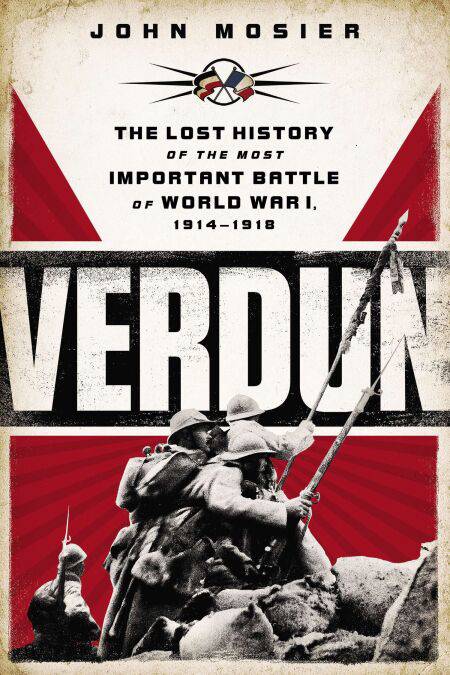
Verdun E-BOOK
The Lost History of the Most Important Battle of World War I
John Mosier
E-book | Engels
€ 10,40
+ 10 punten
Uitvoering
Omschrijving
Alongside Waterloo and Gettysburg, the Battle of Verdun during the First World War stands as one of history’s greatest clashes. Perfect for military history buffs, this compelling account of one of World War I’s most important battles explains why it is also the most complex and misunderstood.
Although British historians have always seen Verdun as a one-year battle designed by the German chief of staff to bleed France white, historian John Mosier’s careful analysis of the German plans reveals a much more abstract and theoretical approach. From the very beginning of the war until the armistice in 1918, no fewer than eight distinct battles were waged there. These conflicts are largely unknown, even in France, owing to the obsessive secrecy of the French high command.
Our understanding of Verdun has long been mired in myths, false assumptions, propaganda, and distortions. Now, using numerous accounts of military analysts, serving officers, and eyewitnesses, including French sources that have never been translated, Mosier offers a compelling reassessment of the Great War’s most important battle.
Although British historians have always seen Verdun as a one-year battle designed by the German chief of staff to bleed France white, historian John Mosier’s careful analysis of the German plans reveals a much more abstract and theoretical approach. From the very beginning of the war until the armistice in 1918, no fewer than eight distinct battles were waged there. These conflicts are largely unknown, even in France, owing to the obsessive secrecy of the French high command.
Our understanding of Verdun has long been mired in myths, false assumptions, propaganda, and distortions. Now, using numerous accounts of military analysts, serving officers, and eyewitnesses, including French sources that have never been translated, Mosier offers a compelling reassessment of the Great War’s most important battle.
Specificaties
Betrokkenen
- Auteur(s):
- Uitgeverij:
Inhoud
- Aantal bladzijden:
- 400
- Taal:
- Engels
Eigenschappen
- Productcode (EAN):
- 9781101621387
- Verschijningsdatum:
- 30/09/2013
- Uitvoering:
- E-book
- Beveiligd met:
- Adobe DRM
- Formaat:
- ePub


Alleen bij Standaard Boekhandel
+ 10 punten op je klantenkaart van Standaard Boekhandel
Cadeau

AANGERADEN


Beoordelingen
We publiceren alleen reviews die voldoen aan de voorwaarden voor reviews. Bekijk onze voorwaarden voor reviews.