


- Afhalen na 1 uur in een winkel met voorraad
- Gratis thuislevering in België vanaf € 30
- Ruim aanbod met 7 miljoen producten
- Afhalen na 1 uur in een winkel met voorraad
- Gratis thuislevering in België vanaf € 30
- Ruim aanbod met 7 miljoen producten





€ 36,45
+ 72 punten
Omschrijving
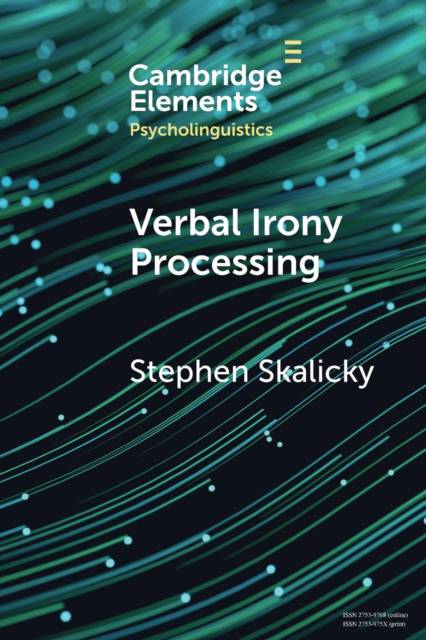
Ironic language is a salient reminder that speakers of all languages do not always mean what they say. While ironic language has captured the attention of theorists and scholars for centuries, it is only since the 1980s that psycholinguistic methods have been employed to investigate how readers and hearers detect, process, and comprehend ironic language. This Element reviews the foundational definitions, theories, and psycholinguistic models of ironic language, covering key questions such as the distinction between literal and ironic meaning, the role of contextual information during irony processing, and the cognitive mechanisms involved. These key questions continue to motivate new studies and methodological innovations, providing ample opportunity for future researchers who wish to continue exploring how ironic language is processed and understood.
Specificaties
Betrokkenen
- Auteur(s):
- Uitgeverij:
Inhoud
- Aantal bladzijden:
- 78
- Taal:
- Engels
- Reeks:
Eigenschappen
- Productcode (EAN):
- 9781009234542
- Verschijningsdatum:
- 2/02/2023
- Uitvoering:
- Paperback
- Formaat:
- Trade paperback (VS)
- Afmetingen:
- 152 mm x 229 mm
- Gewicht:
- 117 g


Alleen bij Standaard Boekhandel
+ 72 punten op je klantenkaart van Standaard Boekhandel
Cadeau

AANGERADEN


Beoordelingen
We publiceren alleen reviews die voldoen aan de voorwaarden voor reviews. Bekijk onze voorwaarden voor reviews.