


- Afhalen na 1 uur in een winkel met voorraad
- Gratis thuislevering in België vanaf € 30
- Ruim aanbod met 7 miljoen producten
- Afhalen na 1 uur in een winkel met voorraad
- Gratis thuislevering in België vanaf € 30
- Ruim aanbod met 7 miljoen producten





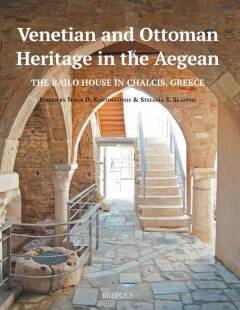
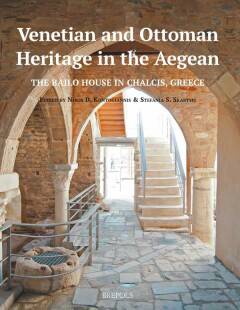
Venetian and Ottoman Heritage in the Aegean
The Bailo House in Chalcis, Greece
Nikos D. Kontogiannis
€ 169,60
+ 339 punten
Omschrijving
This book tells the astonishing story of a secular building and its inhabitants over six centuries and four successive civilizations. The Bailo House was constructed as a public loggia in the 14th century by Venetian officials in their Aegean colony of Negroponte on the Byzantine island of Euripos. Italian designs were followed and copied in the style of the lagoon's palaces, digging the foundations through the earlier Byzantine layers. It later became seat of an Ottoman official, also housing his apothecary. It subsequently passed into the hands of a local Ottoman dignitary, who completely transformed into a typical Middle Eastern mansion. In the early 19th century it was reshaped once again with a neoclassical facade to conform to the European models promoted by the Modern Greek state. Extensive study, excavations and restorations over a ten-year period revealed remarkable evidence for one of the few remaining examples of secular architecture in the Eastern Mediterranean, as well as abundant and rare information about urban planning, material culture, economic and cultural exchanges, art and aesthetics, etc. It is the tale of a harbor town that was always cosmopolitan, a port of call along the Silk Road, the winter base of the Ottoman fleet, a European enclave in the East.
Specificaties
Betrokkenen
- Auteur(s):
- Uitgeverij:
Inhoud
- Aantal bladzijden:
- 280
- Taal:
- Engels
- Reeks:
- Reeksnummer:
- nr. 8
Eigenschappen
- Productcode (EAN):
- 9782503584096
- Verschijningsdatum:
- 25/06/2020
- Uitvoering:
- Paperback
- Formaat:
- Trade paperback (VS)
- Afmetingen:
- 221 mm x 277 mm
- Gewicht:
- 1292 g


Alleen bij Standaard Boekhandel
+ 339 punten op je klantenkaart van Standaard Boekhandel
Cadeau

AANGERADEN


Beoordelingen
We publiceren alleen reviews die voldoen aan de voorwaarden voor reviews. Bekijk onze voorwaarden voor reviews.