


- Afhalen na 1 uur in een winkel met voorraad
- Gratis thuislevering in België vanaf € 30
- Ruim aanbod met 7 miljoen producten
- Afhalen na 1 uur in een winkel met voorraad
- Gratis thuislevering in België vanaf € 30
- Ruim aanbod met 7 miljoen producten





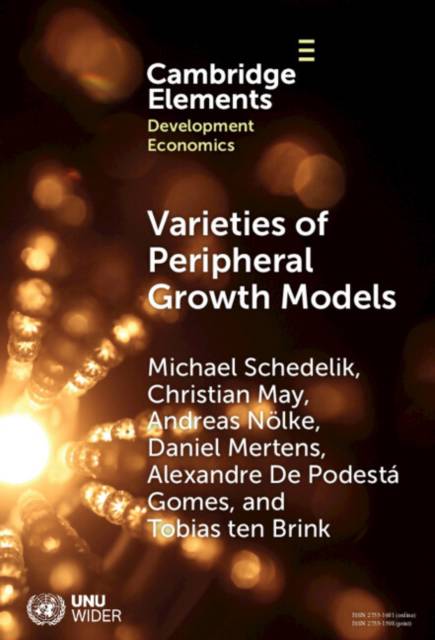
Varieties of Peripheral Growth Models
Towards a New Comparative Political Economy of Development
Michael Schedelik, Christian May, Andreas Nolke
€ 112,95
+ 225 punten
Uitvoering
Omschrijving
This Element seeks to develop an empirical research agenda that explores the applicability of the growth model perspective in comparative political economy to emerging capitalist economies (ECEs). Such an approach emphasizes the variety of possible growth models and their implications for development, providing an alternative to universalizing economic models as prevalent in mainstream development discourse. Using national accounts data for several large ECEs in the period from 2001 to 2022, the authors first propose a typology of peripheral growth models with varying degrees of economic vulnerability. Most notably, they add an investment-led model to the prevalent juxtaposition of consumption-led and export-led growth models. Subsequently, they employ several case vignettes from Brazil, Indonesia, South Africa, Turkey, Thailand and Vietnam to unpack the effects of volatile international interdependencies, such as commodity cycles, and diverse political underpinnings on peripheral growth models. This title is also available as open access on Cambridge Core.
Specificaties
Betrokkenen
- Auteur(s):
- Uitgeverij:
Inhoud
- Aantal bladzijden:
- 92
- Taal:
- Engels
- Reeks:
Eigenschappen
- Productcode (EAN):
- 9781009546737
- Verschijningsdatum:
- 19/03/2026
- Uitvoering:
- Hardcover
- Formaat:
- Genaaid
- Afmetingen:
- 152 mm x 229 mm
- Gewicht:
- 294 g


Alleen bij Standaard Boekhandel
+ 225 punten op je klantenkaart van Standaard Boekhandel
Cadeau

AANGERADEN


Beoordelingen
We publiceren alleen reviews die voldoen aan de voorwaarden voor reviews. Bekijk onze voorwaarden voor reviews.