


- Afhalen na 1 uur in een winkel met voorraad
- Gratis thuislevering in België vanaf € 30
- Ruim aanbod met 7 miljoen producten
- Afhalen na 1 uur in een winkel met voorraad
- Gratis thuislevering in België vanaf € 30
- Ruim aanbod met 7 miljoen producten





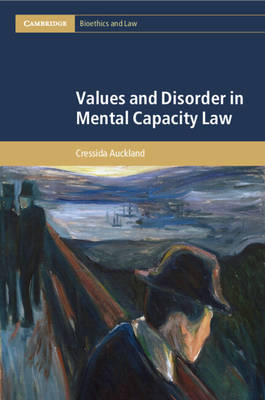
Values and Disorder in Mental Capacity Law
Cressida Auck
€ 57,95
+ 115 punten
Omschrijving
This book draws on the disciplines of law, philosophy, and psychiatry to interrogate whether the Mental Capacity Act 2005 meets the challenges posed by mental disorder to decision-making. It is often assumed that to allow space for individuality, any test for capacity must focus only on decision-making processes and not on the substance of the values that underpin decisions. Auckland challenges this assumption, arguing that the current law serves merely as a façade, behind which judgements can be made about the nature of a person's values, free from proper scrutiny. This book provides an in-depth analysis of when and how a person's disordered values should be relevant to the determination of their capacity, offering novel suggestions for reforming the capacity test to better reflect the impact of disorder on decision-making. It also explores the implications of this analysis for people found to lack capacity, concluding that reforms to the best interest provisions are urgently needed. This title is part of the Flip it Open Programme and may also be available Open Access. Check our website Cambridge Core for details.
Specificaties
Betrokkenen
- Auteur(s):
- Uitgeverij:
Inhoud
- Aantal bladzijden:
- 340
- Taal:
- Engels
- Reeks:
Eigenschappen
- Productcode (EAN):
- 9781009482066
- Verschijningsdatum:
- 18/12/2025
- Uitvoering:
- Paperback
- Formaat:
- Trade paperback (VS)
- Afmetingen:
- 152 mm x 229 mm
- Gewicht:
- 453 g


Alleen bij Standaard Boekhandel
+ 115 punten op je klantenkaart van Standaard Boekhandel
Cadeau

AANGERADEN


Beoordelingen
We publiceren alleen reviews die voldoen aan de voorwaarden voor reviews. Bekijk onze voorwaarden voor reviews.