



Bedankt voor het vertrouwen het afgelopen jaar! Om jou te bedanken bieden we GRATIS verzending (in België) aan op alles gedurende de hele maand januari.
- Afhalen na 1 uur in een winkel met voorraad
- In januari gratis thuislevering in België
- Ruim aanbod met 7 miljoen producten
Bedankt voor het vertrouwen het afgelopen jaar! Om jou te bedanken bieden we GRATIS verzending (in België) aan op alles gedurende de hele maand januari.
- Afhalen na 1 uur in een winkel met voorraad
- In januari gratis thuislevering in België
- Ruim aanbod met 7 miljoen producten





€ 1,99
+ 1 punten
Uitvoering
Omschrijving
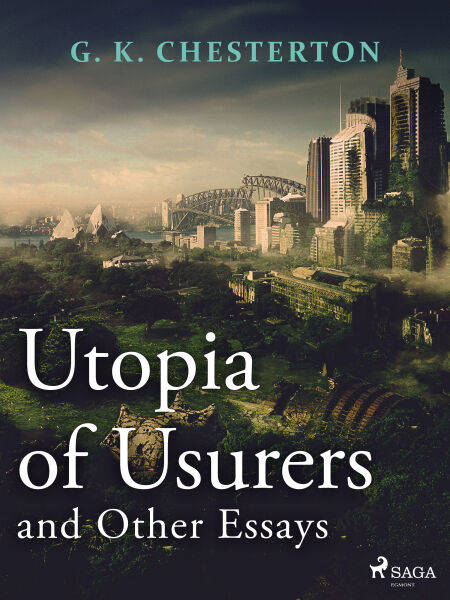
"We must hit Capitalism, and hit it hard, for the plain and definite reason that it is growing stronger." Chesterton’s essays on the pitfalls of capitalism, written in the early 1900s, still strike true in the modern-day.
One of England’s greatest essayists, Chesterton analyses the claims of capitalism without preaching or favouring Marxist and socialist thinkers.
Instead, Chesterton’s anti-capitalist arguments are drawn from his own Christian ideals and philosophical reasoning, giving a unique perspective that is invaluable for historians and students of philosophy alike.
Readers of Rebecca Henderson or Thomas Piketty should not miss this extraordinary glimpse into the ideologies of the past.
Gilbert Keith Chesterton (1874 – 1936) was an English writer, journalist, philosopher, and literary critic. An unparalleled essayist, he produced over four thousand essays during his lifetime, alongside eighty novels and two hundred short stories.
Tackling topics of politics, history, philosophy, and theology with tenacious wit and humour, G. K. Chesterton was often considered a master of the paradox. Himself both a modernist and devout Catholic, he is remembered best for his priest-detective short stories ‘Father Brown’, and his metaphysical thriller ‘The Man Who Was Thursday’.
In his lifetime, Chesterton befriended and debated some of the greatest thinkers of the age, such as George Bernard Shore, H. G. Wells, and Bertrand Russell, while his works went on to inspire figures including T. S. Eliot, Michael Collins, and Mahatma Gandhi.
One of England’s greatest essayists, Chesterton analyses the claims of capitalism without preaching or favouring Marxist and socialist thinkers.
Instead, Chesterton’s anti-capitalist arguments are drawn from his own Christian ideals and philosophical reasoning, giving a unique perspective that is invaluable for historians and students of philosophy alike.
Readers of Rebecca Henderson or Thomas Piketty should not miss this extraordinary glimpse into the ideologies of the past.
Gilbert Keith Chesterton (1874 – 1936) was an English writer, journalist, philosopher, and literary critic. An unparalleled essayist, he produced over four thousand essays during his lifetime, alongside eighty novels and two hundred short stories.
Tackling topics of politics, history, philosophy, and theology with tenacious wit and humour, G. K. Chesterton was often considered a master of the paradox. Himself both a modernist and devout Catholic, he is remembered best for his priest-detective short stories ‘Father Brown’, and his metaphysical thriller ‘The Man Who Was Thursday’.
In his lifetime, Chesterton befriended and debated some of the greatest thinkers of the age, such as George Bernard Shore, H. G. Wells, and Bertrand Russell, while his works went on to inspire figures including T. S. Eliot, Michael Collins, and Mahatma Gandhi.
Specificaties
Betrokkenen
- Auteur(s):
- Uitgeverij:
Inhoud
- Aantal bladzijden:
- 100
- Taal:
- Engels
Eigenschappen
- Productcode (EAN):
- 9788726992618
- Verschijningsdatum:
- 12/01/2023
- Uitvoering:
- E-book
- Beveiligd met:
- Digital watermarking
- Formaat:
- ePub


Alleen bij Standaard Boekhandel
+ 1 punten op je klantenkaart van Standaard Boekhandel
SOLDEN


Beoordelingen
We publiceren alleen reviews die voldoen aan de voorwaarden voor reviews. Bekijk onze voorwaarden voor reviews.