


- Afhalen na 1 uur in een winkel met voorraad
- Gratis thuislevering in België vanaf € 30
- Ruim aanbod met 7 miljoen producten
- Afhalen na 1 uur in een winkel met voorraad
- Gratis thuislevering in België vanaf € 30
- Ruim aanbod met 7 miljoen producten





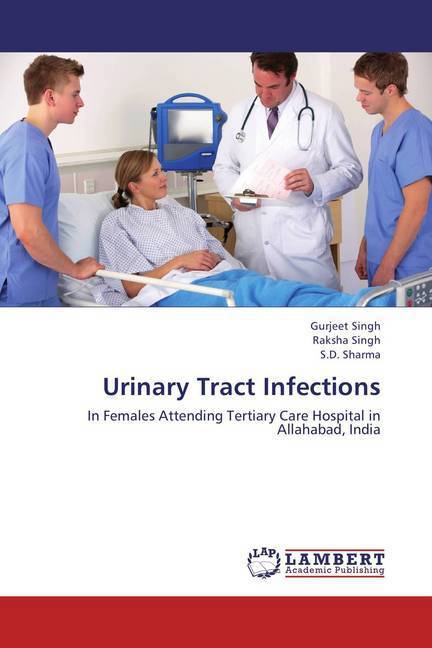
Urinary Tract Infections
In Females Attending Tertiary Care Hospital in Allahabad, India
Gurjeet Singh, Raksha Singh, S. D. Sharma
Paperback | Engels
€ 46,95
+ 93 punten
Omschrijving
Urinary tract infection (UTI) is the most common acute infection which occurs in females. Females are more frequently affected by UTI (particularly cystitis) due to (1) colonization of urethra by colonic Gram-negative bacilli (2) close proximity of urethra to anus. (3) short length of urethra (about 4cm) and (4) sexual intercourse (Introduction of bacteria into the bladder). Hence this study was undertaken to detect the incidence of UTI in females and to determine the factors responsible for the development of UTI. 100 urine samples from females were processed for detection of UTI and antibiotic sensitivity test performed. 10% patients showed UTI of which maximum (60%) were found to be in age group of 26 - 30 years also (60%) were in lower socio economic strata almost. It was observed that incidence of UTI was twofold in pregnant females i.e. (16.67%) as compared to the non-pregnant females (7.15%). Conclusion: In present study the factor favouring development of UTI were (1) sexually active age group 26 - 30 years (2)lower socio economic strata (3) pregnancy. Of the organism isolated all showed sensitivity to Ampicillin+Sulbactam, Co-trimoxazole.
Specificaties
Betrokkenen
- Auteur(s):
- Uitgeverij:
Inhoud
- Aantal bladzijden:
- 60
- Taal:
- Engels
Eigenschappen
- Productcode (EAN):
- 9783659431814
- Verschijningsdatum:
- 20/07/2013
- Uitvoering:
- Paperback
- Afmetingen:
- 150 mm x 220 mm
- Gewicht:
- 100 g



Alleen bij Standaard Boekhandel
+ 93 punten op je klantenkaart van Standaard Boekhandel

Beoordelingen
We publiceren alleen reviews die voldoen aan de voorwaarden voor reviews. Bekijk onze voorwaarden voor reviews.