


- Afhalen na 1 uur in een winkel met voorraad
- Gratis thuislevering in België vanaf € 30
- Ruim aanbod met 7 miljoen producten
- Afhalen na 1 uur in een winkel met voorraad
- Gratis thuislevering in België vanaf € 30
- Ruim aanbod met 7 miljoen producten





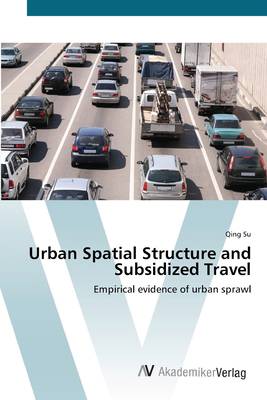
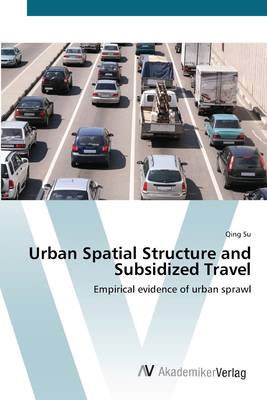
Urban Spatial Structure and Subsidized Travel
Empirical evidence of urban sprawl
Qing Su
Paperback | Engels
€ 58,45
+ 116 punten
Omschrijving
Revision with unchanged content. The last half of the twentieth century has witnessed an accelerated growth of suburbs within the urban areas as Americans moved to new homes on the fringes of metropolitan areas. It is also true that U.S. travelers have never paid the full cost of their travel.What is the relationship between these two phe nomena? In 2000, all levels of U.S. government provided a $46.5-billion sub sidy to highway users. That motorists were subsidized at 36.5 percent of total highway expenditures was not an anomaly. The public transit users were subsidized at 74 percent. When users do not pay the full cost of their travel, they have an incentive to travel greater distances and make more frequent trips, which may contribute to excessive urban expansion. This book provides both theoretical and empirical analysis to answer two questions: (1)Is there causal relationship between transportation subsidies and suburbanization? (2)Do the subsidies provided to highway users and transit users play the same role in urban expansion? The book is addressed to professionals in ur ban and transportation planning fields. It is also directed towards researchers in urban and regional economics, environmental economics, urban planning, and social ecology.
Specificaties
Betrokkenen
- Auteur(s):
- Uitgeverij:
Inhoud
- Aantal bladzijden:
- 176
- Taal:
- Engels
Eigenschappen
- Productcode (EAN):
- 9783639425253
- Verschijningsdatum:
- 11/06/2012
- Uitvoering:
- Paperback
- Afmetingen:
- 152 mm x 229 mm
- Gewicht:
- 268 g


Alleen bij Standaard Boekhandel
+ 116 punten op je klantenkaart van Standaard Boekhandel
Cadeau

AANGERADEN


Beoordelingen
We publiceren alleen reviews die voldoen aan de voorwaarden voor reviews. Bekijk onze voorwaarden voor reviews.