Standaard Boekhandel gebruikt cookies en gelijkaardige technologieën om de website goed te laten werken en je een betere surfervaring te bezorgen.
Hieronder kan je kiezen welke cookies je wilt inschakelen:
Technische en functionele cookies
Deze cookies zijn essentieel om de website goed te laten functioneren, en laten je toe om bijvoorbeeld in te loggen. Je kan deze cookies niet uitschakelen.
Analytische cookies
Deze cookies verzamelen anonieme informatie over het gebruik van onze website. Op die manier kunnen we de website beter afstemmen op de behoeften van de gebruikers.
Marketingcookies
Deze cookies delen je gedrag op onze website met externe partijen, zodat je op externe platformen relevantere advertenties van Standaard Boekhandel te zien krijgt.
Je cadeautjes zeker op tijd in huis hebben voor de feestdagen? Kom langs in onze winkels en vind het perfecte geschenk!
Afhalen na 1 uur in een winkel met voorraad
Gratis thuislevering in België vanaf € 30
Ruim aanbod met 7 miljoen producten
Je cadeautjes zeker op tijd in huis hebben voor de feestdagen? Kom langs in onze winkels en vind het perfecte geschenk!
Je kan maximaal 250 producten tegelijk aan je winkelmandje toevoegen. Verwijdere enkele producten uit je winkelmandje, of splits je bestelling op in meerdere bestellingen.
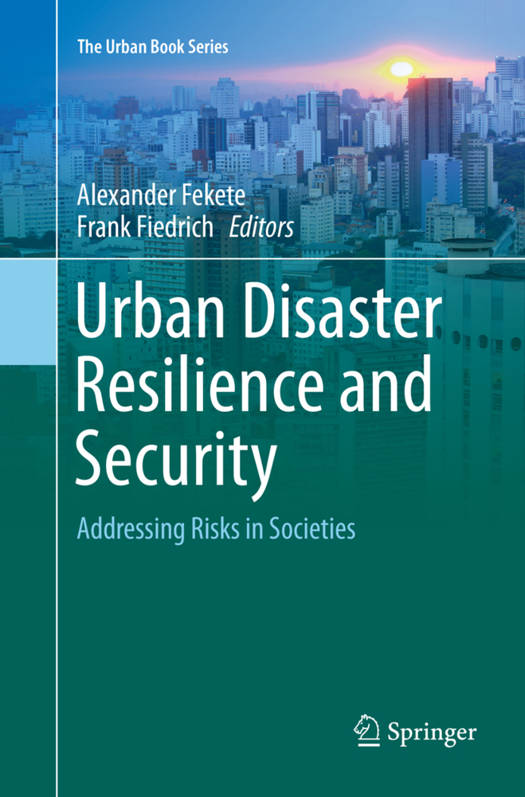
This edited book investigates the interrelations of disaster impacts, resilience and security in an urban context. Urban as a term captures megacities, cities, and generally, human settlements, that are characterised by concentration of quantifiable and non-quantifiable subjects, objects and value attributions to them. The scope is to narrow down resilience from an all-encompassing concept to applied ways of scientifically attempting to 'measure' this type of disaster related resilience. 28 chapters in this book reflect opportunities and doubts of the disaster risk science community regarding this 'measurability'. Therefore, examples utilising both quantitative and qualitative approaches are juxtaposed. This book concentrates on features that are distinct characteristics of resilience, how they can be measured and in what sense they are different to vulnerability and risk parameters. Case studies in 11 countries either use a hypothetical pre-event estimation of resilience or are addressing a 'revealed resilience' evident and documented after an event. Such information can be helpful to identify benchmarks or margins of impact magnitudes and related recovery times, volumes and qualities of affected populations and infrastructure.