



Je cadeautjes zeker op tijd in huis hebben voor de feestdagen? Kom langs in onze winkels en vind het perfecte geschenk!
- Afhalen na 1 uur in een winkel met voorraad
- Gratis thuislevering in België vanaf € 30
- Ruim aanbod met 7 miljoen producten
Je cadeautjes zeker op tijd in huis hebben voor de feestdagen? Kom langs in onze winkels en vind het perfecte geschenk!
- Afhalen na 1 uur in een winkel met voorraad
- Gratis thuislevering in België vanaf € 30
- Ruim aanbod met 7 miljoen producten





Omschrijving
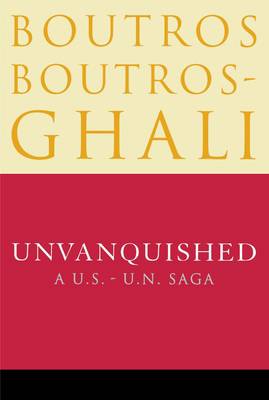
For years the United States has treated the United Nations as an extension of its own foreign policy, while other member states--especially smaller, less influential countries--have looked to the United Nations to represent their collective interests. This conflict escalated in the fall of 1996, when the United States unilaterally decided to deny Secretary-General Boutros Boutros-Ghali a second term.
In this book Boutros-Ghali argues that U.S. policy toward the United Nations threatens the fragile fabric of the international organization. By selectively consulting the Security Council, the United States has frequently condemned the United Nations to the status of scapegoat in international affairs, notably during peacekeeping missions in Bosnia, Somalia, and Rwanda. Meanwhile, the United Nations's financial crisis persists as the United States fails to pay its bills while seeking to further increase its already considerable influence within the organization.
In October 1995 President Clinton lavishly praised Boutros-Ghali for his "outstanding leadership," and thanked him for his "vision." Yet, a mere four months later, the Clinton administration decided that Boutros-Ghali would have to go. What happened in that short time to convince the United States that the secretary-general was now a liability? United States domestic electoral politics were decisive: While campaigning for the primaries, Bob Dole was scoring heavily by repeatedly ridiculing Boutros-Ghali. To neutralize Dole's challenge, Clinton denied the controversial secretary-general a second term, vetoing his reelection in the Security Council despite unanimous support from its other members.
Boutros-Ghali reveals the dramatic conflict and the personalities involved and considers the future of the United Nations in light of American domination.
In this book Boutros-Ghali argues that U.S. policy toward the United Nations threatens the fragile fabric of the international organization. By selectively consulting the Security Council, the United States has frequently condemned the United Nations to the status of scapegoat in international affairs, notably during peacekeeping missions in Bosnia, Somalia, and Rwanda. Meanwhile, the United Nations's financial crisis persists as the United States fails to pay its bills while seeking to further increase its already considerable influence within the organization.
In October 1995 President Clinton lavishly praised Boutros-Ghali for his "outstanding leadership," and thanked him for his "vision." Yet, a mere four months later, the Clinton administration decided that Boutros-Ghali would have to go. What happened in that short time to convince the United States that the secretary-general was now a liability? United States domestic electoral politics were decisive: While campaigning for the primaries, Bob Dole was scoring heavily by repeatedly ridiculing Boutros-Ghali. To neutralize Dole's challenge, Clinton denied the controversial secretary-general a second term, vetoing his reelection in the Security Council despite unanimous support from its other members.
Boutros-Ghali reveals the dramatic conflict and the personalities involved and considers the future of the United Nations in light of American domination.
Specificaties
Betrokkenen
- Auteur(s):
- Uitgeverij:
Inhoud
- Aantal bladzijden:
- 368
- Taal:
- Engels
Eigenschappen
- Productcode (EAN):
- 9780812992045
- Verschijningsdatum:
- 1/06/1999
- Uitvoering:
- Paperback
- Formaat:
- Trade paperback (VS)
- Afmetingen:
- 141 mm x 243 mm
- Gewicht:
- 535 g


Alleen bij Standaard Boekhandel
+ 56 punten op je klantenkaart van Standaard Boekhandel
CADEAU


Beoordelingen
We publiceren alleen reviews die voldoen aan de voorwaarden voor reviews. Bekijk onze voorwaarden voor reviews.