


- Afhalen na 1 uur in een winkel met voorraad
- Gratis thuislevering in België vanaf € 30
- Ruim aanbod met 7 miljoen producten
- Afhalen na 1 uur in een winkel met voorraad
- Gratis thuislevering in België vanaf € 30
- Ruim aanbod met 7 miljoen producten





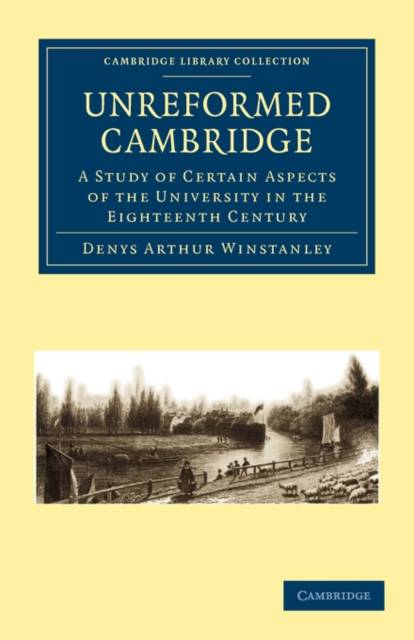
Unreformed Cambridge
A Study of Certain Aspects of the University in the Eighteenth Century
Denys Arthur Winstanley
€ 39,45
+ 78 punten
Omschrijving
This vintage book by the distinguished historian D.A. Winstanley describes Cambridge University in the eighteenth century, a period supposedly characterised by lazy, drunken students, academics preoccupied with their own advancement, and institutionalised resistance to reform. Winstanley's objective was to discover how such a state of affairs came about, and was able to continue for so long. His book is a gold-mine of facts, anecdotes and contemporary descriptions of life at Cambridge. The author explains how Fellows and Professors were elected, how students chose their colleges, and how teaching was organised. Fellows were not permitted to marry, and graduation involved assenting to Anglicanism. There are accounts of bribery, blackmail and brawls. However, amid the morass of 'torpidity', energetic and right-thinking individuals emerged to challenge the status quo and promote educational and institutional reforms.
Specificaties
Betrokkenen
- Auteur(s):
- Uitgeverij:
Inhoud
- Aantal bladzijden:
- 428
- Taal:
- Engels
- Reeks:
Eigenschappen
- Productcode (EAN):
- 9781108002295
- Verschijningsdatum:
- 20/07/2009
- Uitvoering:
- Paperback
- Formaat:
- Trade paperback (VS)
- Afmetingen:
- 140 mm x 216 mm
- Gewicht:
- 539 g



Alleen bij Standaard Boekhandel
+ 78 punten op je klantenkaart van Standaard Boekhandel
Cadeau

AANGERADEN


Beoordelingen
We publiceren alleen reviews die voldoen aan de voorwaarden voor reviews. Bekijk onze voorwaarden voor reviews.