


- Afhalen na 1 uur in een winkel met voorraad
- Gratis thuislevering in België vanaf € 30
- Ruim aanbod met 7 miljoen producten
- Afhalen na 1 uur in een winkel met voorraad
- Gratis thuislevering in België vanaf € 30
- Ruim aanbod met 7 miljoen producten





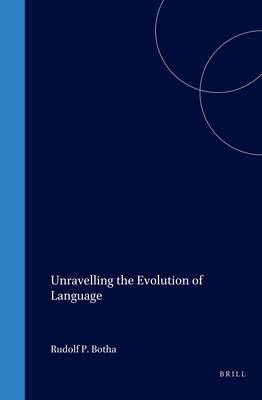
Unravelling the Evolution of Language
Rudolf P Botha
€ 238,45
+ 476 punten
Omschrijving
What blocks the way to a better understanding of language evolution, it is widely held, is above all a paucity of factual evidence. Not so, argues Unravelling the Evolution of Language. This book finds the main obstacle, instead, in a poverty of a specific kind of theory--restrictive theory. It shows, too, that this poverty of restrictive theory is one of the root causes of the paucity of factual evidence. "Unravelling"...takes it that a theory of a thing T--for example, language--is restrictive if it gives us a basis for distinguishing T in a non-arbitrary way from all things that are in fact distinct from it, including those that happen to be related to it. The book then argues in detail that much of the recent work on language evolution proceeds from loose assumptions, rather than restrictive theories, about a number of crucial "things" The entities, prelinguistic or linguistic, that are believed to have undergone evolution; the processes by which these entities are believed to have evolved; the ways in which these (pre)linguistic entities link up with entities that are believed to be correlates of them; the sources of data that are believed to yield indirect evidence about the evolution of language; and the factors that add to or subtract from the scientific substance of accounts of language evolution. In support of its main argument, Unravelling the Evolution of Language puts forward detailed analyses of various recent accounts of language evolution, including co-optationist accounts by Noam Chomsky, Stephen Jay Gould, Massimo Piattelli-Palmarini and Lyle Jenkins preadaptationist accounts by Philip Lieberman, Wendy Wilkins, Jenny Wakefield, Andrew Carstairs-McCarthy, William Calvin and Derek Bickerton adaptationist accounts by Steven Pinker, Paul Bloom and others. This means that Unravelling...as it builds its main argument, also offers an appraisal of some significant contributions to recent work on language evolution.
Specificaties
Betrokkenen
- Auteur(s):
- Uitgeverij:
Inhoud
- Aantal bladzijden:
- 256
- Taal:
- Engels
- Reeks:
- Reeksnummer:
- nr. 19
Eigenschappen
- Productcode (EAN):
- 9780080443188
- Verschijningsdatum:
- 4/11/2003
- Uitvoering:
- Hardcover
- Formaat:
- Genaaid
- Afmetingen:
- 168 mm x 231 mm
- Gewicht:
- 607 g


Alleen bij Standaard Boekhandel
+ 476 punten op je klantenkaart van Standaard Boekhandel
Cadeau

AANGERADEN


Beoordelingen
We publiceren alleen reviews die voldoen aan de voorwaarden voor reviews. Bekijk onze voorwaarden voor reviews.