


- Afhalen na 1 uur in een winkel met voorraad
- Gratis thuislevering in België vanaf € 30
- Ruim aanbod met 7 miljoen producten
- Afhalen na 1 uur in een winkel met voorraad
- Gratis thuislevering in België vanaf € 30
- Ruim aanbod met 7 miljoen producten





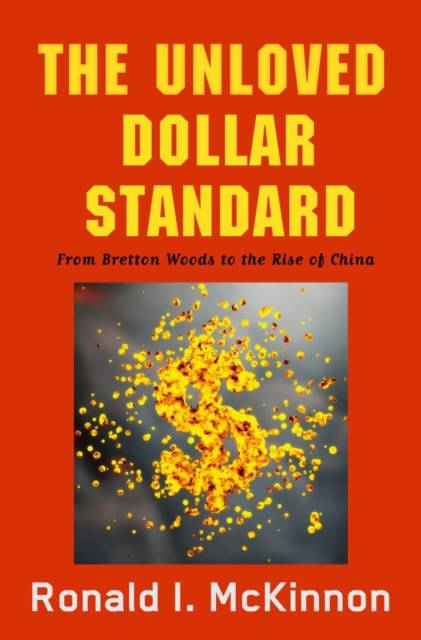
Unloved Dollar Standard
From Bretton Woods to the Rise of China
Ronald I McKinnon
Hardcover | Engels
€ 122,45
+ 244 punten
Omschrijving
The world dollar standard is an accident of history that greatly facilitates international trade and exchange-even trade not directly involving the United States. Since 1945, the dollar has been the key currency for clearing international payments among banks including interventions by governments to set exchange rates, the dominant currency for invoicing trade in primary commodities, and the principal currency in official exchange reserves. Although the strong network effects of the dollar standard greatly increases the financial efficiency of multilateral trade, nobody loves it. Erratic U.S. monetary and exchange rate policies have continually made foreigners unhappy. A weak and falling dollar led to the worldwide price inflations of the 1970s and contributed to the disastrous asset bubbles and global credit crisis of the noughties -- including the global credit crunch of 2008-09. Dollar weakness aggravated the postwar world's three great oil shocks in 1973, 1979, and 2007-08. After 2008, the U.S. Federal Reserve Bank's policy of keeping short-term interest rates near zero and out of alignment with emerging markets on the dollar standard's periphery, makes the international monetary system vulnerable to 'carry' trades: hot money inflows into the periphery that cause a loss of monetary control, commodity bubbles, and worldwide inflation . When these carry-trade bubbles suddenly unwind, they can result in huge swings in exchange rates and credit crunches. The asymmetrical nature of the dollar standard also makes many Americans unhappy because they cannot control their own exchange rate. Under the rules of the dollar standard game as explained in chapters 2 and 3 of this book, foreign governments may opt to set their exchange rates against the dollar while, to prevent conflict, the U.S. government typically does not intervene. Nevertheless, Americans often complain about how foreigners set their dollar exchange rates unfairly. Japan bashing in the late 1970s to the mid-1990s over the alleged under valuation of the yen, and China bashing in the new millennium over the alleged undervaluation of the renminbi, are two cases in point. Thus, while nobody loves the dollar standard, the revealed preference of both governments and private participants in the foreign exchange markets since 1945 is to continue to use it. As the principal monetary mechanism ensuring that international trade remains robustly multilateral rather than narrowly bilateral, it is a remarkable survivor that is too valuable to lose and too difficult to replace. This book provides historical and analytical perspectives on the different phases of the postwar dollar standard in order to better understand its resilience in spite of the great volatility in today's global monetary system.
Specificaties
Betrokkenen
- Auteur(s):
- Uitgeverij:
Inhoud
- Aantal bladzijden:
- 240
- Taal:
- Engels
Eigenschappen
- Productcode (EAN):
- 9780199937004
- Verschijningsdatum:
- 27/12/2012
- Uitvoering:
- Hardcover
- Formaat:
- Genaaid
- Afmetingen:
- 163 mm x 236 mm
- Gewicht:
- 539 g


Alleen bij Standaard Boekhandel
+ 244 punten op je klantenkaart van Standaard Boekhandel
Cadeau

AANGERADEN


Beoordelingen
We publiceren alleen reviews die voldoen aan de voorwaarden voor reviews. Bekijk onze voorwaarden voor reviews.