


- Afhalen na 1 uur in een winkel met voorraad
- Gratis thuislevering in België vanaf € 30
- Ruim aanbod met 7 miljoen producten
- Afhalen na 1 uur in een winkel met voorraad
- Gratis thuislevering in België vanaf € 30
- Ruim aanbod met 7 miljoen producten





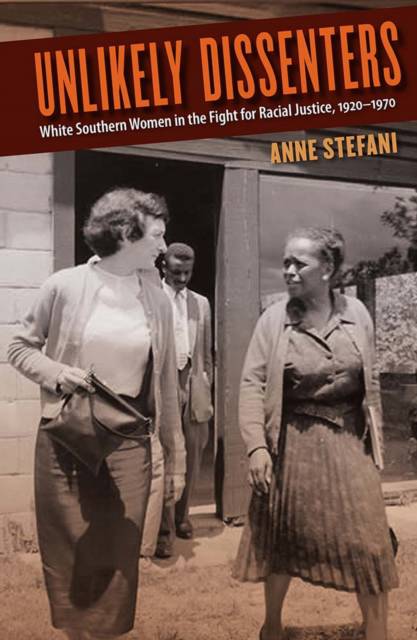
Unlikely Dissenters
White Southern Women in the Fight for Racial Justice, 1920-1970
Anne Stefani
Paperback | Engels
€ 38,45
+ 76 punten
Uitvoering
Omschrijving
"Stefani redefines the proverbial 'southern lady' with a close look at over fifty white, anti-racist women. Concentrating on traits that linked these women across two generations, Unlikely Dissenters provides the first comprehensive study of how these southern women both employed and destroyed a stereotype."-Gail S. Murray, editor of Throwing Off the Cloak of Privilege "Presents a sophisticated and well-supported argument that women such as Lillian Smith, Virginia Durr, and Anne Braden challenged white supremacy at its core while knowing that they would be regarded as traitors to their race, region, and gender in doing so."-Peter B. Levy, author of Civil War on Race Street Between 1920 and 1970, a small but significant number of white women confronted the segregationist system in the American South, ultimately contributing to its demise. For many of these reformers, the struggle for African American civil rights was akin to their own complex process of personal emancipation from gender norms. As part of the white community, they wrestled with guilt as members of the "oppressor" group. Yet as women in a patriarchal society, they were also "victims." This paradoxical double identity enabled them to develop a special brand of activism that combatted white supremacy while emancipating them from white patriarchy. Using the 1954 Brown decision as a pivot, Anne Stefani examines and compares two generations of white women who spoke out against Jim Crow while remaining deeply attached to their native South. She demonstrates how their unique grassroots community-oriented activism functioned within-and even used to its advantage-southern standards of respectability.
Specificaties
Betrokkenen
- Auteur(s):
- Uitgeverij:
Inhoud
- Aantal bladzijden:
- 350
- Taal:
- Engels
Eigenschappen
- Productcode (EAN):
- 9780813054650
- Verschijningsdatum:
- 29/08/2017
- Uitvoering:
- Paperback
- Formaat:
- Trade paperback (VS)
- Afmetingen:
- 156 mm x 234 mm
- Gewicht:
- 535 g



Alleen bij Standaard Boekhandel
+ 76 punten op je klantenkaart van Standaard Boekhandel
Cadeau

AANGERADEN


Beoordelingen
We publiceren alleen reviews die voldoen aan de voorwaarden voor reviews. Bekijk onze voorwaarden voor reviews.