


- Afhalen na 1 uur in een winkel met voorraad
- Gratis thuislevering in België vanaf € 30
- Ruim aanbod met 7 miljoen producten
- Afhalen na 1 uur in een winkel met voorraad
- Gratis thuislevering in België vanaf € 30
- Ruim aanbod met 7 miljoen producten





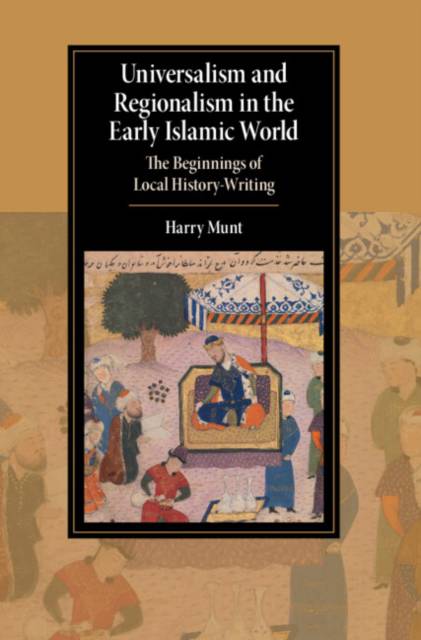
Universalism and Regionalism in the Early Islamic World
The Beginnings of Local History-Writing
Harry Munt
€ 194,95
+ 389 punten
Omschrijving
What was the role of local history-writing in the early Islamic World, and why was it such a popular way of thinking about the past? In this innovative study, Harry Munt explores this understudied phenomenon. Examining primary sources in both Arabic and Persian, Munt argues that local history-writing must be situated within its appropriate historical contexts to explain why it was such a popular way of thinking about the past, more popular than most other contemporary forms of history-writing. The period until the end of the eleventh century CE saw many significant developments in ideas about community, about elite groups and about social authority. This study demonstrates how local history-writing played a key role in these developments, forming part of the way that Muslim scholars negotiated the dialogues between more universalist and more particularist approaches to the understanding of communities. Munt further demonstrates that local historians were participating in debates that ranged into disciplines far beyond history-writing.
Specificaties
Betrokkenen
- Auteur(s):
- Uitgeverij:
Inhoud
- Aantal bladzijden:
- 404
- Taal:
- Engels
- Reeks:
Eigenschappen
- Productcode (EAN):
- 9781009648264
- Verschijningsdatum:
- 19/03/2026
- Uitvoering:
- Hardcover
- Formaat:
- Genaaid
- Afmetingen:
- 152 mm x 229 mm
- Gewicht:
- 707 g


Alleen bij Standaard Boekhandel
+ 389 punten op je klantenkaart van Standaard Boekhandel
Cadeau

AANGERADEN


Beoordelingen
We publiceren alleen reviews die voldoen aan de voorwaarden voor reviews. Bekijk onze voorwaarden voor reviews.