


- Afhalen na 1 uur in een winkel met voorraad
- Gratis thuislevering in België vanaf € 30
- Ruim aanbod met 7 miljoen producten
- Afhalen na 1 uur in een winkel met voorraad
- Gratis thuislevering in België vanaf € 30
- Ruim aanbod met 7 miljoen producten





€ 48,95
+ 97 punten
Eenvoudig bestellen
Veilig betalen


Gratis thuislevering vanaf € 30 (via bpost)
Gratis levering in je Standaard Boekhandel
Omschrijving
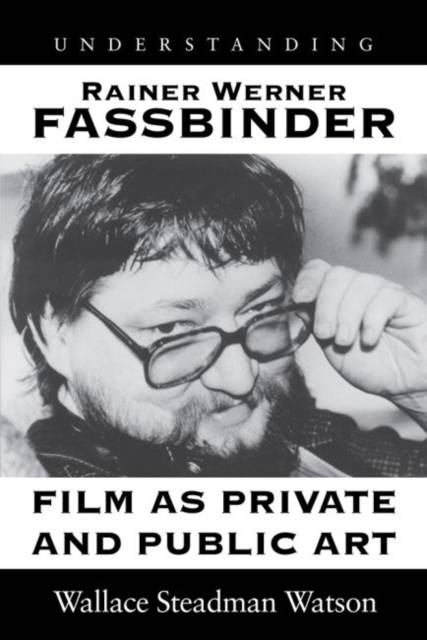
A comprehensive, balanced review of Fassbinder's life and career
Understanding Rainer Werner Fassbinder introduces scholars and students to the controversial and prolific but brief career of a filmmaker hailed as one of the New German Cinema's most talented exponents. Combining a chronological survey with a thematic exploration, Wallace Steadman Watson reviews the entirety of Fassbinder's artistic output, focusing specifically on fifteen of the filmmaker's thirty-eight feature-length works. Watson's interpretations of these films, all of which he studied in Germany, scrutinize the financial constraints, material conditions, and script development involved in their production.
Watson draws on a wide assortment of Fassbinder interviews--many of which are not available in English--and on theoretical and critical approaches employed in the Frankfort School, performance and reception theories, gay and lesbian film theory, and studies of melodrama and camp. Watson also incorporates his own interviews with Fassbinder's mother and with the woman who served as Fassbinder's film editor and companion during the final four years of his life.
Specificaties
Betrokkenen
- Auteur(s):
- Uitgeverij:
Inhoud
- Aantal bladzijden:
- 341
- Taal:
- Engels
- Reeks:
Eigenschappen
- Productcode (EAN):
- 9781570030796
- Verschijningsdatum:
- 31/03/1996
- Uitvoering:
- Hardcover
- Formaat:
- Genaaid
- Afmetingen:
- 161 mm x 236 mm
- Gewicht:
- 675 g



Alleen bij Standaard Boekhandel
+ 97 punten op je klantenkaart van Standaard Boekhandel
CADEAU

AANGERADEN


Beoordelingen
We publiceren alleen reviews die voldoen aan de voorwaarden voor reviews. Bekijk onze voorwaarden voor reviews.